Platform
Solutions
Resources
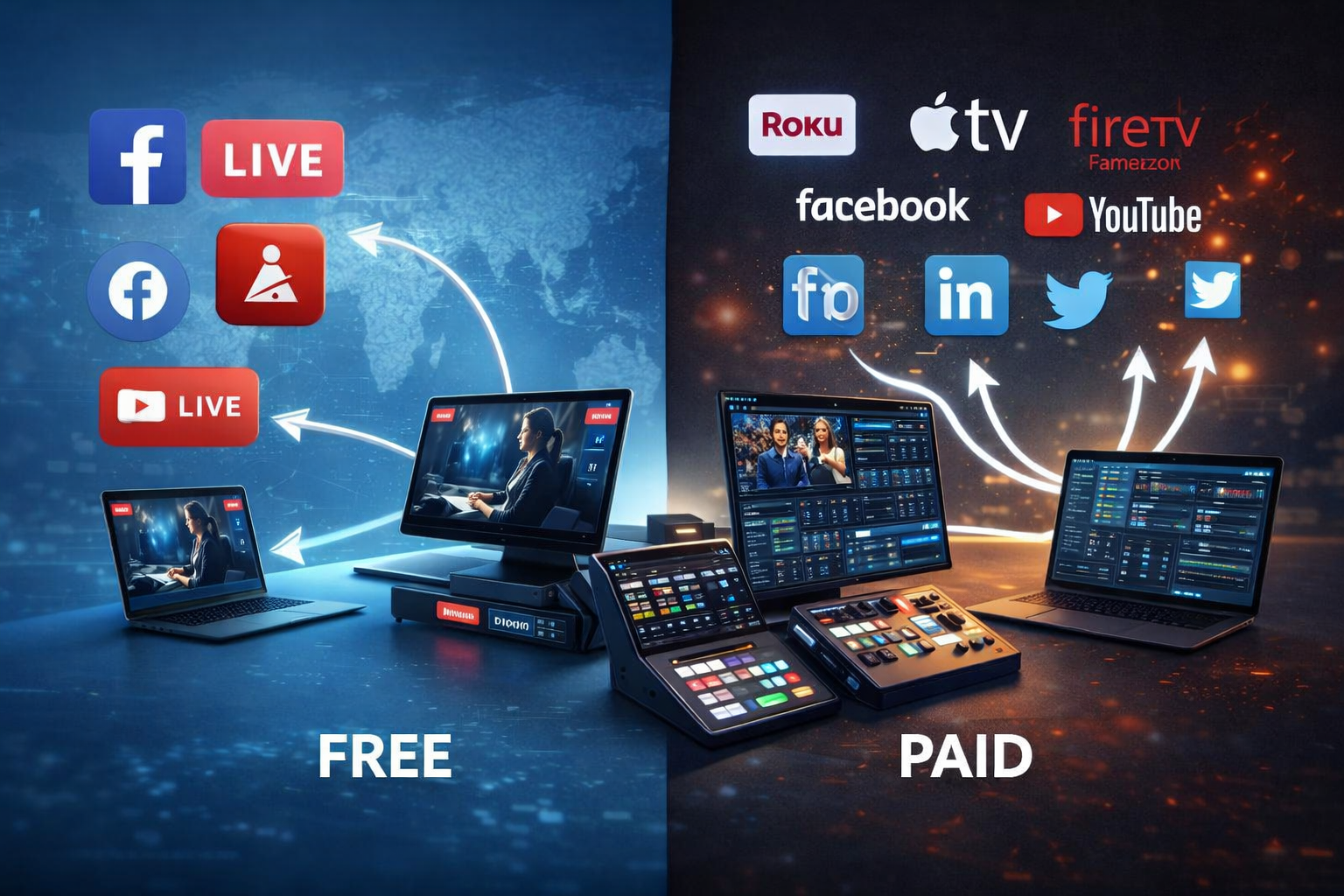
While free platforms like Facebook Live and YouTube Live offer accessible entry points into live streaming, professional distribution platforms like Lightcast provide a fundamentally different approach designed for professional broadcasting needs. Understanding these differences helps organizations determine when the investment in a dedicated platform makes strategic sense.
Multi-Platform Simultaneous Broadcasting
The most significant advantage of paid platforms is their ability to broadcast to multiple destinations simultaneously. Free platforms confine your stream to their single ecosystem, while professional distribution services allow you to reach audiences across custom branded apps on Roku, Apple TV, Amazon Fire, Facebook, YouTube, LinkedIn, Twitter, and your own website all at once. This eliminates the need to choose which audience segment to prioritize and ensures maximum reach for every broadcast.
Brand Control and White-Label Experience
Free platforms place your content within their branded environment, complete with their interface, competing recommendations, and advertisements you don't control. Paid platforms typically offer white-label solutions that maintain your brand identity throughout the viewing experience. Your audience sees your branding, your player design, and your calls-to-action without distraction from platform-owned elements or competitor content.
Advanced Analytics and Viewer Intelligence
While free platforms provide basic viewer counts and watch time, professional streaming platforms deliver granular analytics about audience behavior. These systems typically track detailed engagement metrics, drop-off points, geographic distribution, device types, and individual viewer journeys. This data proves essential for organizations that need to demonstrate ROI, refine their content strategy, or understand which segments of their broadcasts resonate most strongly with viewers.
Reliability and Service Level Agreements
Free platforms offer no guarantees about uptime, streaming quality, or technical support during critical broadcasts. Paid platforms typically provide service level agreements with guaranteed uptime percentages and dedicated technical support. For organizations broadcasting earnings calls, product launches, or mission-critical communications, this reliability makes the difference between professional execution and potential embarrassment.
Custom Integration Capabilities
Professional platforms generally offer robust APIs and integration options that connect live streaming with your existing technology stack. This might include CRM integration for lead capture, marketing automation platform connections, registration systems, or custom authentication for private broadcasts. Free platforms provide limited integration options designed primarily to keep viewers within their ecosystem rather than support your broader business objectives.
Content Ownership and Portability
When you broadcast on free platforms, you operate under their terms of service, which can change without notice and may restrict how you use your own content. Paid platforms typically provide complete ownership of your streams and recordings with the freedom to download, repurpose, and distribute content as you choose. This ownership becomes particularly important for organizations building content libraries or needing to maintain control over proprietary information.
Advanced Production Features
Many paid platforms include production capabilities that free services don't offer, such as stream switching between multiple sources, picture-in-picture layouts, overlay graphics, lower thirds, and real-time editing during broadcasts. These features enable more polished, professional productions without requiring separate production software or technical expertise.
The decision between free and paid platforms ultimately depends on your streaming objectives. Organizations broadcasting occasionally to consumer audiences may find free platforms sufficient. However, businesses using live streaming for customer communications, internal training, product demonstrations, or any scenario where brand control, reliability, and detailed analytics matter will typically find that paid platforms deliver value that justifies their cost through improved outcomes and professional presentation quality.
Ready to Elevate Your Live Streaming Strategy?
The right live streaming platform transforms how your organization connects with audiences, whether you're reaching customers, training teams, or broadcasting critical announcements. If you're currently relying on free platforms and experiencing limitations in brand control, analytics depth, or multi-platform distribution, it may be time to explore professional streaming solutions that align with your business objectives.
Consider evaluating platforms based on your specific needs: Do you require simultaneous multi-platform broadcasting? Is white-label branding essential for maintaining your professional image? Are detailed viewer analytics necessary for demonstrating ROI to stakeholders? Does your organization need guaranteed uptime for mission-critical communications?
Take the next step by requesting demos from professional streaming platforms that offer the capabilities most important to your use case. Many providers offer trial periods or proof-of-concept opportunities that let you test features like custom branding, advanced analytics, and multi-destination streaming before making a commitment. This hands-on evaluation helps you understand the tangible difference professional platforms deliver compared to free alternatives.
Whether you're just beginning to explore live streaming or looking to upgrade from basic platforms, investing time in the right solution now prevents limitations later as your streaming needs grow and evolve