Platform
Solutions
Resources
Picture this: Your city council meeting that once reached 8,000 cable subscribers now struggles to find 1,500 viewers online. The harsh reality facing local governments nationwide is that traditional cable access has lost over 50% of its subscriber base in the past decade, leaving civic leaders scrambling to find new ways to connect with their communities.
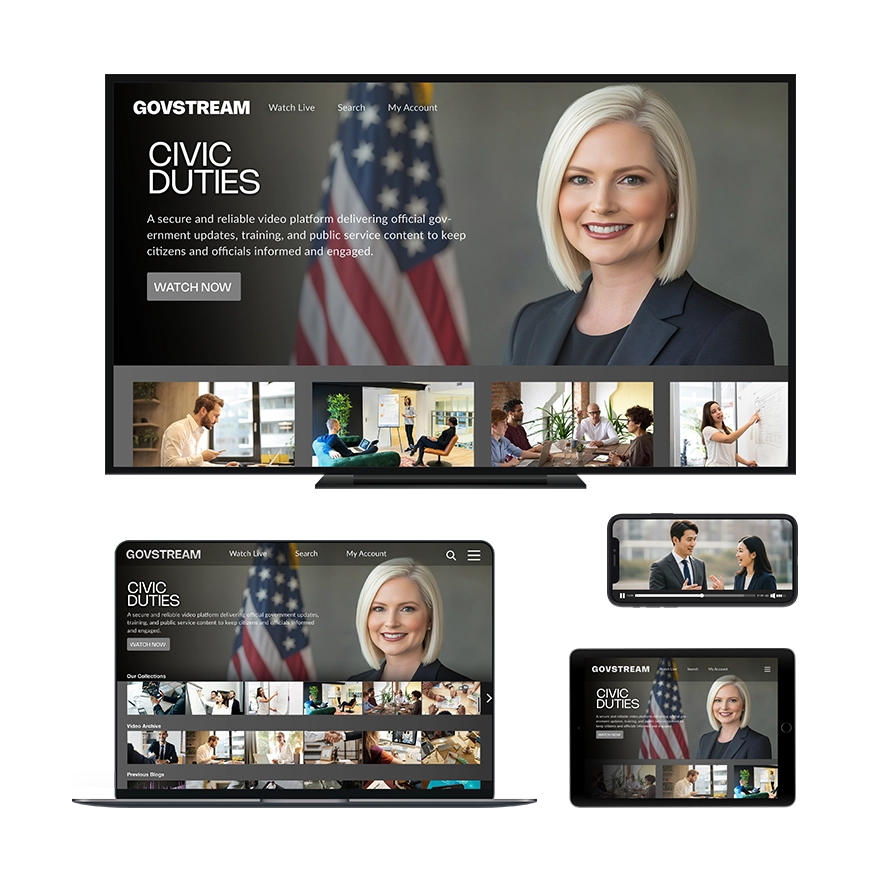
The solution isn't waiting for cable to recover—it's creating your own direct-to-consumer streaming presence. Custom branded streaming apps, particularly on popular platforms like Roku, offer local governments an unprecedented opportunity to deliver community content directly to citizens' living rooms without relying on declining cable infrastructure.
This guide presents ten battle-tested strategies that successful local governments use to launch, grow, and optimize their Roku channels. From content planning to audience engagement, these approaches will help you transform your community communication from cable-dependent to streaming-savvy. Whether you're a small township or a major metropolitan area, these strategies will guide you through building a sustainable streaming presence that actually reaches and engages your constituents.
The difference between a successful government Roku channel and one that quietly fades into obscurity often comes down to what happens before launch day. Many local governments make the critical mistake of rushing to publish their channel with minimal content, thinking they can "build as they go." This approach creates a sparse, unprofessional first impression that's nearly impossible to overcome.
Think of it like opening a library with only three books on the shelves. Even if you plan to add more later, visitors who walk into that empty space will assume it's not worth returning to. Your Roku channel faces the same challenge—residents who discover a channel with only a handful of videos will likely never check back, no matter how much content you add later.
When residents discover your government's Roku channel, they're making a split-second judgment about whether it's worth their time. A channel with 20-30 hours of organized, quality content signals that your government is serious about this communication method. It demonstrates commitment, professionalism, and respect for viewers' time.
This foundation serves multiple strategic purposes beyond just filling space. First, it allows you to create distinct content categories that serve different community interests—governance, public safety, recreation, community events, and educational programming. Second, it gives you the flexibility to test what resonates with your audience without the pressure of producing new content constantly. Third, it provides a buffer that keeps your channel active even during busy periods when new content production slows down.
Start by conducting a comprehensive audit of existing video assets across all government departments. Most municipalities already possess significant content that's never been organized or distributed effectively. Council meeting recordings, community event footage, departmental training videos, and public information content often sit in various locations waiting to be repurposed.
Create four to six distinct content categories that reflect genuine community interests. These might include "City Council & Government," "Community Events & Celebrations," "Public Safety & Emergency Services," "Parks & Recreation," "Know Your Government," and "Local Business Spotlights." Each category should launch with at least 3-5 hours of content to demonstrate depth and variety.
Establish basic production standards that balance quality with achievability. Your standards should address audio clarity (the most critical factor for viewer retention), video resolution (1080p is ideal but 720p is acceptable), consistent branding (intro/outro graphics with your government logo), and accessibility features (closed captions for all content). These standards ensure professional presentation without requiring broadcast-level resources.
Beyond repurposing existing content, develop evergreen programming that provides long-term value and fills library gaps. "Know Your Government" educational series work exceptionally well—short videos explaining how different departments serve the community, how to access specific services, or understanding government processes that affect daily life.
Department spotlight interviews offer another efficient content creation approach. Simple sit-down conversations with department heads discussing their work, challenges, and community impact require minimal production resources while providing valuable insight into government operations. These videos remain relevant for extended periods and help residents understand the breadth of services their government provides.
Seasonal programming provides another strategic content opportunity. Create videos about summer recreation programs, winter weather preparedness, spring community cleanup initiatives, or holiday events. This content can be reused annually with minor updates, building your library efficiently while maintaining relevance.
Content organization directly affects whether residents can find what interests them. Develop a clear metadata strategy that includes descriptive titles, detailed descriptions with relevant keywords, appropriate category tags, and accurate date information. This metadata improves searchability both within your channel and in Roku's broader search functionality.
Create playlists that group related content logically. "All City Council Meetings 2025
The foundation of a successful government Roku channel isn't just having content—it's having organized, discoverable content that serves different community needs. Think of your channel like a well-designed library: without clear sections and categories, even the best content becomes overwhelming and unusable.
Most government channels fail because they dump everything into a single feed. Meeting recordings mix with community events, public safety announcements blend with recreation programs, and viewers can't find what they actually want to watch. This creates frustration and abandonment.
Strategic content categorization solves this by creating clear pathways for different viewer interests. When someone wants to watch city council meetings, they shouldn't have to scroll past dozens of park programs. When a parent looks for recreation content, they shouldn't wade through zoning hearings.
Too few categories create the same overwhelming dump problem you're trying to avoid. Too many categories fragment your content so thinly that each section feels empty and neglected.
Four to five categories provide enough distinction to serve different interests while maintaining sufficient content depth in each section. This number also works well with Roku's interface design, creating a clean, scannable navigation experience that doesn't overwhelm viewers.
The key is choosing categories that reflect actual community interests rather than internal government organizational charts. Your viewers don't care about departmental structures—they care about topics that affect their lives.
City Council & Government: This category houses official proceedings, council meetings, public hearings, and formal government business. It serves residents who want to stay informed about civic decisions and participate in local democracy. Include both live meetings and archived sessions with clear dates and agenda topics.
Community Events: Feature local festivals, holiday celebrations, cultural programs, and community gatherings. This content showcases community life and creates emotional connections with your channel. Events content often drives the highest engagement because it celebrates shared experiences and local pride.
Public Safety: Consolidate content from police, fire, emergency management, and public health departments. This category serves the critical function of keeping residents informed about safety issues, emergency preparedness, and community protection services. Include both educational content and timely safety updates.
Parks & Recreation: Highlight recreational programs, park features, sports leagues, and community activities. This category appeals to families and active community members while promoting municipal services that enhance quality of life. Feature seasonal programming and activity guides.
Know Your Government: Create educational content explaining how government works, introducing department services, and demystifying civic processes. This category serves residents who want to understand and engage with local government but find traditional civics information dry or inaccessible.
Start by auditing your existing content and mapping it to potential categories. You'll quickly see which categories have sufficient content depth and which need development. This audit reveals content gaps that should inform your production priorities.
Name categories using clear, plain language that residents actually use. "Parks & Recreation" works better than "Department of Community Services." "Public Safety" beats "Emergency Services Division." Think about how people search for information, not how your organization chart is structured.
Within each category, create subcategories or playlists that provide additional organization. Under "City Council & Government," you might have "Council Meetings," "Planning Commission," and "Public Hearings." This secondary organization helps viewers find specific content without cluttering your main navigation.
Maintain consistent content standards across all categories. While production styles might vary—community events can be more casual than council meetings—basic quality thresholds for audio clarity, video resolution, and accessibility features should remain constant.
The technical foundation of your streaming initiative will determine everything from daily operational efficiency to long-term scalability. While the excitement of launching a Roku channel often focuses on content and promotion, the platform partner you choose quietly shapes every aspect of your streaming success—from how easily staff can upload videos to whether your channel can handle live meeting streams without crashes.
This decision carries particular weight for government organizations because you're not just selecting software—you're choosing a long-term partner that must understand public sector compliance requirements, accessibility mandates, and budget realities that commercial streaming platforms often overlook.
Government streaming platforms need capabilities that generic consumer streaming services simply don't provide. Your platform must handle everything from routine meeting broadcasts to emergency communications, all while maintaining accessibility compliance that commercial platforms treat as optional add-ons.
The right platform eliminates technical barriers that would otherwise require hiring specialized IT staff. You need systems designed for communications professionals, not software engineers—interfaces where uploading a city council meeting is as straightforward as attaching a file to an email, and where scheduling content doesn't require reading technical documentation.
Multi-platform distribution represents another critical requirement. Your residents watch content on Roku, Fire TV, Apple TV, smartphones, and computers. Managing separate apps for each platform creates unsustainable workload, so your platform partner must handle distribution across all major streaming devices from a single content upload.
Content Management Workflow: Test how the platform handles your most common tasks. Upload a meeting recording, schedule it for publication, add captions, and organize it into categories. If these basic operations feel complicated during a demo, they'll be frustrating in daily use. The best platforms make routine tasks almost invisible, letting your team focus on content quality rather than technical processes.
Live Streaming Reliability: Government meetings can't have technical failures during critical votes or public hearings. Your platform needs proven reliability for live streams, with backup systems that automatically switch if primary connections fail. Ask potential vendors about their uptime statistics and what happens when internet connections drop during live broadcasts.
Accessibility Compliance Features: Federal accessibility requirements aren't optional for government content. Your platform must provide automated closed captioning with tools for human review and correction, support for audio descriptions, and interfaces that work with screen readers. These features should be built into the core platform, not expensive add-ons that strain your budget.
Analytics and Reporting: Understanding what content resonates with your community requires meaningful analytics. Look for platforms that show not just view counts, but completion rates, return viewership, and content performance across different categories. Government-focused platforms often provide reports formatted for council presentations or budget justifications.
Platforms built specifically for government and educational organizations understand your unique operational context. They know that you can't implement revenue-sharing models because you're distributing publicly funded content. They design workflows around government approval processes rather than commercial publishing speed. They build compliance features as core capabilities rather than afterthoughts.
Lightcast exemplifies this government-focused approach with 15 years of experience specifically in public sector streaming. Their platform handles everything from content upload to distribution across Roku, Apple TV, and Amazon Fire devices, with over 15,000 published apps demonstrating proven reliability at scale. The system is designed for government communications teams who need professional results without requiring technical expertise.
This specialization matters because generic streaming platforms force you to adapt your workflows to their commercial assumptions. Government-specific platforms adapt to your reality—understanding that content may need legal review before publication, that accessibility isn't negotiable, and that budget cycles affect purchasing decisions.
Revenue-sharing models that work for
Your government Roku channel might have excellent content, but if residents can't find it in Roku's vast ecosystem of thousands of channels, you're broadcasting into a void. The harsh reality is that Roku's search algorithms and user browsing behaviors determine whether your channel gets discovered or remains invisible to the very citizens you're trying to reach.
Think of Roku's channel store like a massive library where your government channel competes for attention alongside entertainment giants, news networks, and niche content providers. Without strategic optimization, your channel becomes the equivalent of a book shelved in the wrong section with a confusing title—technically available but practically invisible.
Roku users discover channels through three primary pathways: direct search using specific terms, browsing category listings, and recommendations based on viewing history. Your optimization strategy must address all three discovery methods to maximize visibility among your target audience of local residents.
The platform's search algorithm prioritizes exact matches in channel names, followed by keyword relevance in descriptions and category alignment. This means every word in your channel name and description directly impacts whether residents find you when searching for local government information, community news, or city services.
Your channel name serves as the foundation for discoverability. The most effective approach combines your municipality's official name with clear government identifiers that residents actually search for. Names like "City of Springfield Official" or "Jefferson County Government TV" perform significantly better than creative alternatives that sacrifice searchability.
Include Geographic Identifiers: Always incorporate your city, county, or township name exactly as residents know it. If your community commonly uses abbreviations or nicknames, consider including those variations in your channel description rather than the official name.
Add Clear Government Markers: Terms like "Official," "Government," "City," or "County" help residents distinguish your legitimate government channel from unofficial community content. This clarity builds trust while improving search relevance.
Avoid Clever Over Clear: Resist the temptation to use creative names like "Springfield Stream" or "County Connect" that might seem modern but reduce searchability. Residents searching for government content use straightforward terms, not marketing slogans.
Your channel description provides critical keyword opportunities that affect search ranking and help residents understand your content value. The first 100 characters are particularly important, as they appear in search results and category listings before users click for more details.
Focus your description on terms residents actually use when seeking local government information: "city council meetings," "community events," "local news," "public safety updates," "parks and recreation," and "municipal services." These practical keywords align with real search behaviors rather than government jargon.
Structure your description to answer the immediate question: "What will I find on this channel?" Lead with your most compelling content offerings, then explain the breadth of programming available. Avoid bureaucratic language that obscures value—write as if explaining your channel to a neighbor.
Roku's category system presents a strategic challenge for government channels. You must balance accurate categorization with maximum visibility in categories where residents actually browse for content. The "News & Weather" category often provides better discoverability than more niche government-specific categories that receive less traffic.
Consider your primary content focus when selecting categories. If council meetings and community news dominate your programming, "News & Weather" makes sense. If educational content about government services is your strength, "Educational" might be appropriate. Some platforms allow secondary category selections that expand your discoverability footprint.
Your channel icon and banner artwork must achieve instant recognition while standing out in Roku's visual interface.
The difference between a government Roku channel that becomes a community staple and one that languishes with minimal viewership often comes down to programming strategy. While broadcasting city council meetings fulfills transparency requirements, it rarely builds the engaged audience that justifies your streaming investment.
The reality is that most residents won't tune in for three-hour budget hearings, but they will watch content that directly connects to their daily lives and community identity. This is where compelling community-focused programming transforms your channel from a meeting archive into a genuine community resource.
Community-focused programming goes beyond simply pointing cameras at local events. It's about creating content that helps residents understand their community, connect with neighbors, and appreciate the people and services that make their municipality function.
Think of your channel as a community storytelling platform rather than a government broadcast service. The most successful government streaming channels develop signature series that residents actively seek out, creating viewing habits that extend far beyond mandatory meeting watching.
This programming serves multiple strategic purposes: it humanizes government operations, showcases community achievements, educates residents about available services, and creates content variety that encourages regular channel visits. When residents discover your channel for a community event highlight, they're more likely to return for meeting coverage later.
Start by creating 2-3 recurring series that can be produced consistently with available resources. These become your programming anchors that residents learn to expect and anticipate.
Department Spotlight Series: Feature different municipal departments explaining their services, introducing staff, and showing behind-the-scenes operations. A 10-minute segment on how the water treatment plant works or what happens at the animal shelter creates educational content that demystifies government operations while highlighting dedicated public servants.
Community Heroes Features: Profile local volunteers, business owners, educators, and residents making positive community impacts. These human-interest stories build community pride while creating highly shareable content that featured individuals promote through their own networks.
Neighborhood Spotlights: Rotate through different neighborhoods or districts, showcasing local businesses, community organizations, parks, and unique characteristics. This approach ensures all areas of your municipality receive attention while creating content that resonates deeply with specific audience segments.
Educational Explainer Series: Develop short videos explaining government processes, services, and resources. Topics like "How to Get a Building Permit," "Understanding Your Property Tax Bill," or "What Happens to Your Recycling" provide evergreen value that residents reference repeatedly.
Align programming with your community's annual calendar to create timely, relevant content that capitalizes on existing community interest and engagement.
Summer programming might feature parks and recreation activities, summer camp highlights, and outdoor event coverage. Fall content could focus on back-to-school initiatives, autumn festivals, and budget planning processes. Winter programming might showcase holiday celebrations, snow removal operations, and indoor recreation facilities.
This seasonal approach creates natural content variety while ensuring your programming stays relevant to what's actually happening in your community. It also helps with content planning by providing a predictable framework for the year ahead.
Community-focused programming doesn't require expensive equipment or large production teams. Many successful series use simple interview formats, basic editing, and authentic storytelling rather than polished production values.
A single staff member with a decent camera, lapel microphone, and basic editing software can produce compelling content. The key is establishing repeatable formats that streamline production while maintaining quality standards.
Consider developing content templates for different series types. Your department spotlight might always follow the same structure: introduction, facility tour, staff interviews, service explanation, and community impact
Random content uploads kill channel momentum faster than almost anything else. When residents visit your Roku channel and find inconsistent programming—three videos uploaded last Tuesday, nothing for two weeks, then suddenly five videos on Friday—they stop checking back. The streaming world has trained audiences to expect predictable content rhythms, and government channels that ignore this reality struggle to build regular viewership.
Strategic programming isn't about uploading more content—it's about creating viewing patterns that turn occasional visitors into regular viewers. Think about how Netflix releases entire seasons on specific days, or how YouTube creators publish videos at consistent times. Your government channel needs similar predictability, adapted to civic content and community interests.
Before you can schedule effectively, you need to understand when your residents actually watch streaming content. Government channels often make the mistake of uploading content based on staff availability rather than viewer behavior. A city council meeting uploaded at 2 PM on a Wednesday might sit unwatched for days because your audience streams content in the evenings or on weekends.
Start by analyzing your existing analytics if you have any streaming history. Look for patterns in when viewers watch content, how long they stay engaged, and which days generate the most activity. If you're just launching, consider your community demographics—working professionals likely stream evenings and weekends, while retirees might watch during daytime hours.
Many government channels find success with evening uploads timed for after-dinner viewing, when families are settling in for entertainment. Weekend mornings also perform well for community-focused content that residents watch while having coffee. The key is consistency—pick your schedule and stick to it so viewers know when to check for new content.
Professional streaming channels organize content into recognizable programming blocks that help viewers know what to expect. Your government channel should do the same, creating themed content days or time slots that build viewing habits.
Weekly Anchor Programming: Establish signature content that appears at the same time each week. "Monday Morning Mayor Updates" or "Friday Community Roundup" gives residents specific reasons to return to your channel regularly. These anchor programs create structure around which you can build additional content.
Thematic Content Days: Organize different content types by day of the week. Mondays might feature government operations and department spotlights, Wednesdays could showcase community events and local organizations, and Fridays might highlight parks and recreation programming. This thematic organization helps viewers find content that interests them without searching through everything.
Seasonal Programming Cycles: Align your content schedule with municipal calendars and community events. Budget season might feature more finance department content and budget explainers. Summer could emphasize parks programming and outdoor events. Holiday periods might showcase community celebrations and seasonal services. This alignment keeps your content relevant to what's happening in residents' lives.
Strategic scheduling requires understanding the different roles of live streaming versus on-demand content. City council meetings and public hearings work well as live streams because they serve residents who want real-time participation in civic processes. But most viewers will watch these meetings on-demand at their convenience, so your scheduling should accommodate both audiences.
Schedule live streams for actual meeting times, but promote the on-demand availability heavily. Many residents appreciate knowing they can watch the full council meeting on their schedule rather than rearranging their evening. Your programming strategy should highlight when live streams occur while emphasizing that all content remains available for on-demand viewing.
For original programming like department spotlights or community features, schedule releases strategically rather than uploading immediately after production. Spreading content releases throughout the week maintains channel activity and gives you consistent programming even during slower production periods.
Launching a successful local government Roku channel requires more than just technical setup—it demands strategic thinking about content, audience, and long-term sustainability. The ten strategies outlined above provide a comprehensive roadmap for transforming your community communication from cable-dependent to streaming-savvy.
Start with building your content foundation and choosing the right platform partner, as these decisions will impact everything that follows. Focus on creating compelling programming that serves your community's actual interests rather than just broadcasting mandatory meetings. Remember that consistency and accessibility matter more than perfection, and use analytics to continuously improve your approach.
The shift from cable access to direct streaming isn't just about technology—it's about building stronger connections between government and citizens. Your Roku channel can become a vital community resource that increases civic engagement, improves transparency, and helps residents stay informed about local issues that affect their daily lives.
Ready to launch your government streaming presence? Start by auditing your existing content and researching platform partners that specialize in government streaming solutions. The sooner you begin this transition, the sooner you'll be reaching citizens where they're actually watching content in 2026. Learn more about our services and discover how we can help you build a sustainable streaming channel that truly serves your community.