Platform
Solutions
Resources
Multi-Platform Video Distribution Is Now a Requirement, Not a Feature
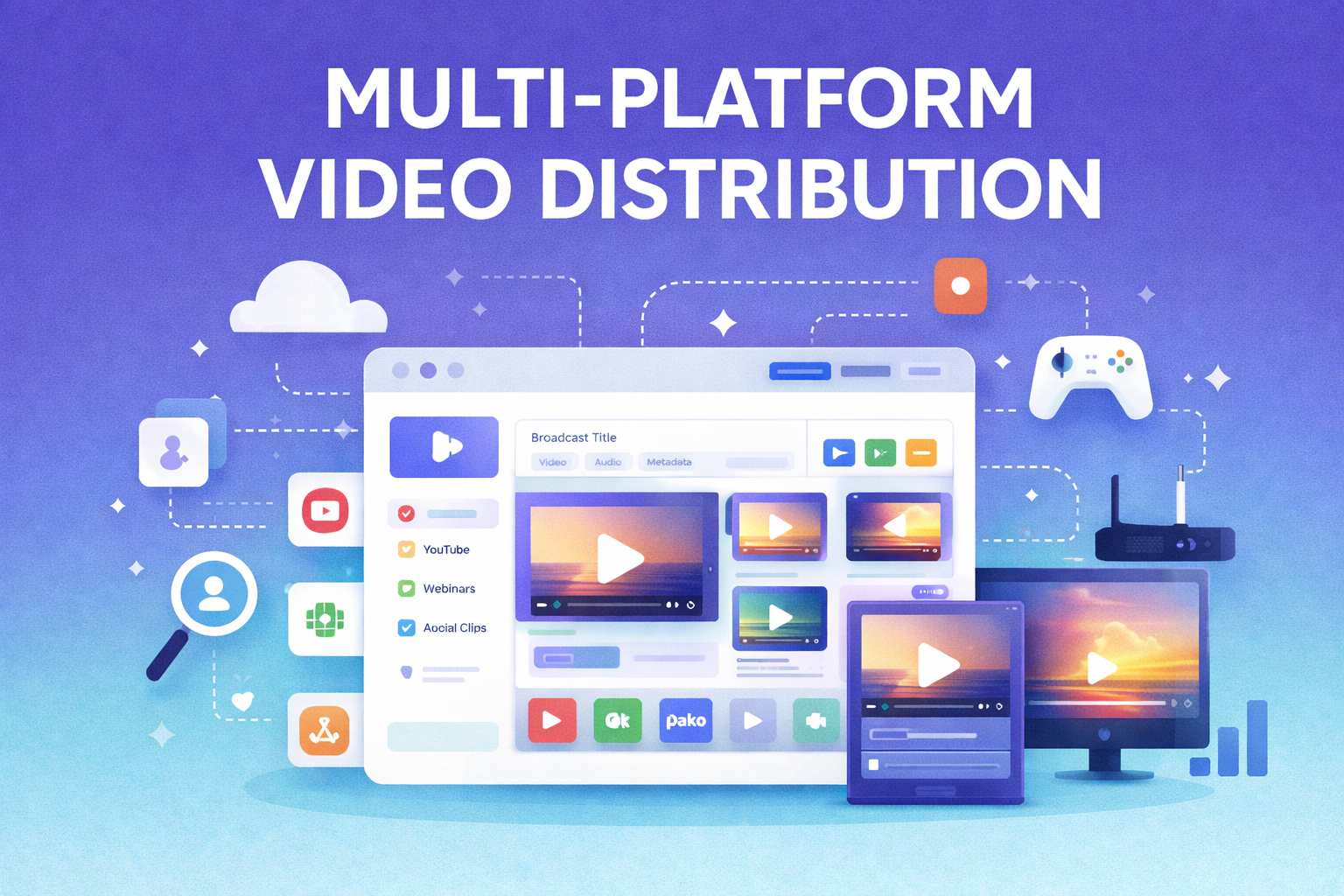
Multi-platform video distribution has become essential for organizations producing video at scale. Audiences no longer consume content in one place. They watch on websites, mobile apps, connected TVs, and streaming platforms. Managing this manually is inefficient and unsustainable. A modern Online Video Platform solves this by centralizing distribution into a single workflow.
The Lightcast Media Cloud was designed to support multi-platform video distribution through an OVP-based framework built for reach, speed, and consistency.
⸻
Why Manual Video Distribution Breaks Down
Many teams still publish video by uploading the same file to multiple destinations one at a time. This creates several problems:
As content libraries grow, this approach becomes impossible to manage efficiently.
⸻
What Multi-Platform Video Distribution Should Look Like
A modern video distribution strategy should allow teams to:
This is the foundation of an Online Video Platform. Distribution is no longer an afterthought. It is a core function of video operations.
⸻
How the Lightcast Media Cloud Simplifies Distribution
The Lightcast Media Cloud enables multi-platform video distribution by combining centralized media management with automated publishing workflows. Key capabilities include:
Instead of managing each platform independently, teams operate from a single media cloud that handles distribution intelligently.
⸻
Why This Matters for Growth and Scale
Organizations that master multi-platform video distribution gain:
When distribution is automated, teams spend less time managing logistics and more time creating content that drives impact.
⸻
Conclusion
Multi-platform video distribution is no longer optional. It is a requirement for organizations that want to scale video efficiently. An OVP-based approach like the Lightcast Media Cloud gives teams the structure, automation, and control needed to publish everywhere without complexity.