
Platform
Solutions
Resources
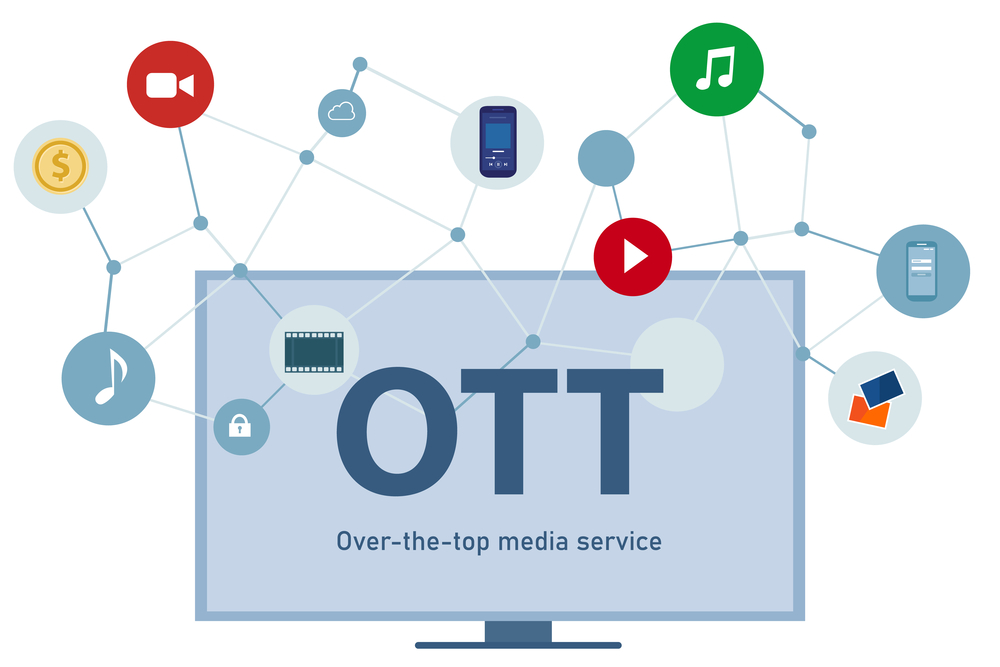
When you're ready to build or upgrade your OTT platform to handle a growing audience, the decisions you make about your infrastructure will determine whether you can deliver smooth playback under all situations, keep costs predictable as your viewership climbs, and maintain control over the entire chain.
You start with the core architecture and getting that right, because bolting on pieces later is likely to create bottlenecks and a cascade of problems. Take a full-stack approach that integrates ingest, transcoding, storage, delivery, and playback into one managed system so you can avoid piecing together separate vendors for encoding, CDN, and app deployment. Each one of those vendors will come with its own contracts, APIs, and failure points, and balancing it all is a full-time job in itself.
Look for proprietary cloud setups that run their own major compute clusters with built-in redundancies. This keeps your uptime solid and really matters if your content includes live events or 24/7 linear channels.
Ingestion pipelines need to accept uploads in every common format while smoothly converting them into adaptive bitrate ladders that can support resolutions anywhere from 360p to 4K. Automated transcoding powered by AI can generate these variants in parallel, attach thumbnails and metadata along the way, and save you hours compared to doing it all manually.
Delivery is where most platforms break under real pressure. Multi-layered CDNs that cache content close to viewers, rather than routing everything through a single origin that could be very far away from the user, are the way to protect yourself from this.
If your service has edge nodes in hundreds of locations, you can reduce your round-trip times and cut buffering, even as you deliver to regions that have congested last-mile networks. The setup should also be able to handle viral spikes automatically.
If you have the ability to embed your revenue options directly into your infrastructure, you can completely avoid those slowdowns that can come when you have to allow third-party ad servers or payment gateways to work on your site. If your platform offers support for AVOD, SVOD, TVOD, and hybrid models of monitization, you can do everything from serve targeted ads during free tiers to gate premium content behind subscriptions or charge for individual events.
Look for a platform that has built-in tools to help you manage your geo-restrictions, blackouts, and entitlement checks, so compliance issues don't require you to do a lot of custom coding.
If you want to succeed, your infrastructure has to be able to push content to every major screen type, without you having to do a separate build for each. Custom-branded apps for Roku, Fire TV, Apple TV, Android TV, iOS, Android, and the web should all launch from the same backend. Unified control here means that you can schedule a change in your 24/7 playout system and be sure that it's going to propogate instantly across all your endpoints.
Getting all this right isn't simple, but we have everything you need. Check us out at Lightcast.com and see a free demo of all we can do.
