Platform
Solutions
Resources
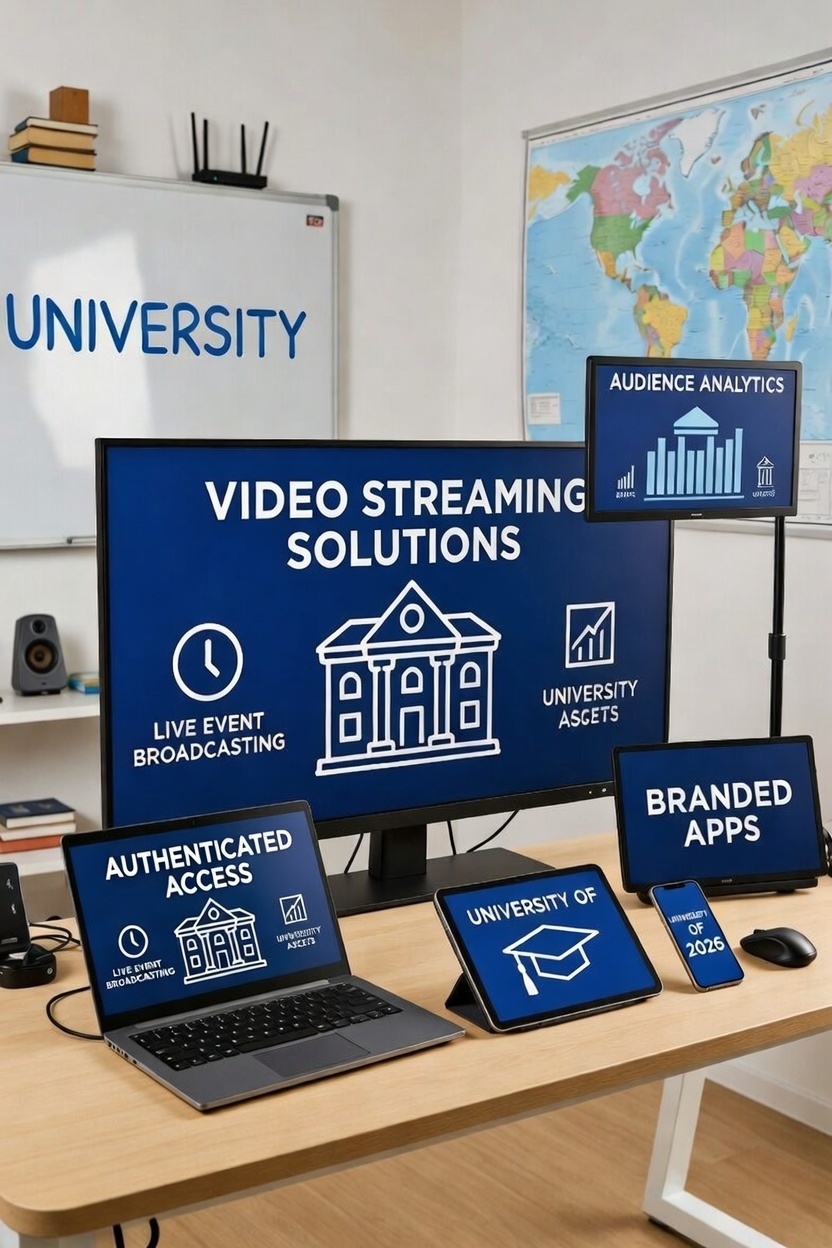
Direct Answer: The best video streaming solutions for universities in 2026 combine live event broadcasting, authenticated on-demand course access, branded multi-platform apps, and detailed audience analytics - all from a single owned platform. Lightcast is purpose-built for this use case, serving higher education institutions that need broadcast-grade infrastructure without routing their audience through third-party platforms like YouTube or Vimeo.
Most universities have video scattered across a half-dozen platforms. Athletics streams on YouTube. Course recordings sit in a learning management system. Alumni content lives on a branded website that nobody updates. Faculty lectures get uploaded to Vimeo. Institutional communications go out via email with embedded links to wherever the video happens to be that week.
The result is no consistent audience experience, no unified analytics, no real ownership of the relationship between the institution and its viewers.
A dedicated university streaming solution consolidates all of that into a single, branded platform the institution controls. Students, alumni, parents, and fans come to your app - not a third-party platform where competitor content, distracting recommendations, and algorithm changes erode your audience relationship over time.
Live streaming is typically the highest-visibility use case for university video. Athletics events, commencement ceremonies, guest lectures, and campus town halls all require reliable, broadcast-quality delivery to audiences that may range from dozens to tens of thousands of concurrent viewers.
What to look for: redundant delivery infrastructure, automatic replay archiving, and the ability to simulcast to multiple platforms from a single source without manual intervention after the stream goes live.
Course recordings, lecture archives, and academic video content need access controls that social platforms cannot provide. Enrolled students should be able to access course content. Non-enrolled users should not. That access should sync with your existing student information system or single sign-on infrastructure.
What to look for: SSO integration, role-based access controls, and the ability to set content permissions at the individual video, course, or department level.
Audiences in 2026 watch on Roku, Fire TV, Apple TV, iOS, Android, and the web. A university streaming solution that only delivers through a website is leaving a significant portion of your viewership on the table - particularly for athletics, where fans want the game on the big screen in their living room, not their laptop.
What to look for: native apps on all major CTV and mobile platforms, with your institution's branding throughout - not the platform provider's.
Live streaming gets the attention, but on-demand libraries are where long-term audience engagement is built. Alumni revisiting memorable athletic moments, prospective students browsing campus life content, continuing education students working through course material on their own schedule - all of these require a well-organized, searchable on-demand library.
What to look for: category and tag organization, search functionality, scheduled publishing, and the ability to structure content by department, team, or program.
Not every university needs to monetize video, but those that do need flexible options. Athletics departments increasingly use pay-per-view for non-conference games. Continuing education programs charge for course access. Alumni associations offer streaming as a membership benefit.
What to look for: subscription tiers, pay-per-view event pricing, donor-supported free access models, and the ability to offer bundled access across content categories.
Viewership data that lives inside a third-party platform is data you cannot act on. University streaming solutions should give institutions direct access to viewer counts, engagement duration, device breakdown, geographic distribution, and content performance trends - without having to request a report from a vendor.
What to look for: real-time dashboards, exportable data, and analytics granular enough to compare performance across departments, events, or content types.
Who owns the audience data? If a viewer watches your athletic events on a third-party platform, that platform owns the relationship. When you move platforms or want to remarket to that audience, you start from zero. Confirm that your institution retains full ownership of all viewer data.
What happens during a high-traffic live event? Ask for specifics on CDN infrastructure and concurrent stream capacity. A commencement ceremony or championship game is not the time to find out your platform cannot handle the load.
How are apps submitted and maintained? App store submission, certification, and ongoing maintenance across Roku, Apple TV, Fire TV, and mobile platforms is a significant technical burden. Understand clearly whether the vendor handles this or hands it back to your IT team.
What does the migration path look like? If you have existing video content on another platform, what does it cost - in time, money, and metadata loss - to move it? A strong vendor will have a documented migration process.
Is the platform purpose-built for institutions? General consumer video platforms were not designed for the access control, branding, and analytics requirements of higher education. Confirm the vendor has a specific track record serving universities, not just businesses or individual creators.
Lightcast has operated as an end-to-end streaming platform for over 15 years and has launched 12,000+ branded apps across higher education and other institutional verticals. Its infrastructure is built for exactly the requirements outlined above.
Live and On-Demand in One Platform: Athletics events, commencement streams, and campus broadcasts go live on the same platform that hosts course archives, alumni content, and on-demand libraries. One CMS, one analytics view, one audience relationship.
Branded Apps on Every Major Platform: Lightcast builds and maintains apps on Roku, Fire TV, Apple TV, iOS, Android, and the web - all under the institution's brand. Students and fans find your content in the app store under your name, not a vendor's.
Full Audience Data Ownership: Every viewer, every session, every content interaction belongs to the institution. Lightcast does not retain or monetize audience data from client platforms.
Global CDN Delivery: With 70,000+ CDN nodes worldwide, Lightcast delivers reliable playback to alumni and international students regardless of geography - a critical consideration for institutions with global reach.
Monetization Built In: Subscriptions, pay-per-view, and donor-supported access models are available natively, without requiring third-party payment integrations that add friction for viewers or complexity for administrators.
The right video streaming solution for a university in 2026 is not the cheapest option or the most familiar brand. It is the platform that gives the institution full ownership of its audience, delivers reliably at scale for live events, provides authenticated access for academic content, and offers the branded app experience that today's students, alumni, and fans expect.
Lightcast is built specifically for that set of requirements, with a 15-year track record and 5,000+ institutional clients to support it.
To learn more or schedule a demonstration, visit lightcast.com.
Published: March 3, 2026
Category: Higher Education Streaming
Tags: university streaming platform, higher education video, live streaming for universities, OTT platform higher ed, branded streaming apps, video solutions for colleges