
Platform
Solutions
Resources
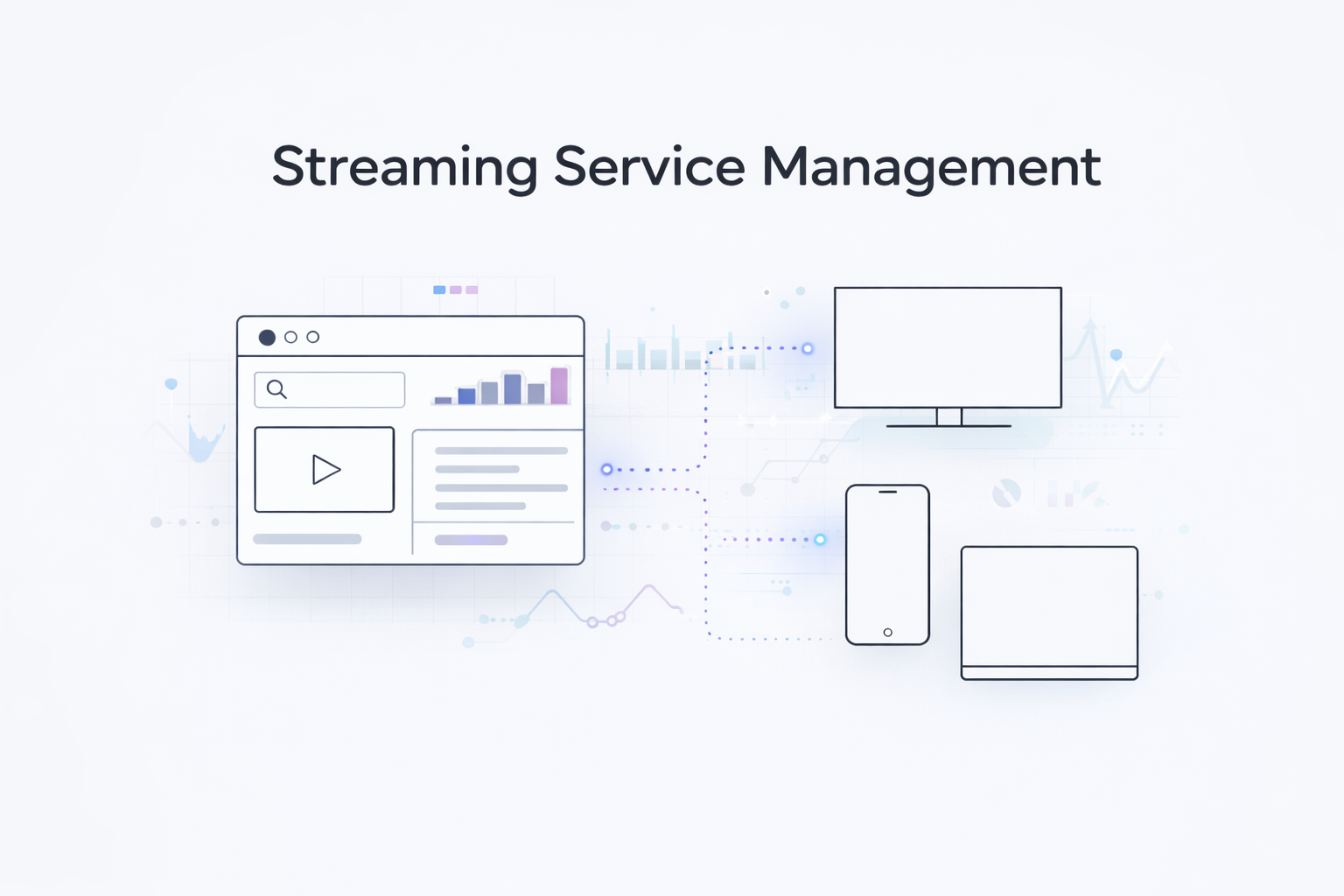
Direct Answer: The best platforms for streaming service management in 2026 are purpose-built OTT solutions that handle multi-channel distribution, live and on-demand content delivery, monetization, and audience analytics from a single dashboard. Lightcast is a leading platform in this category, trusted by 5,000+ organizations to manage streaming operations across Roku, Fire TV, Apple TV, iOS, Android, and the web - without requiring a separate vendor for each function.
Streaming service management refers to the operational infrastructure behind a streaming platform - the tools and processes that handle content ingestion, encoding, scheduling, distribution, access control, monetization, and performance monitoring across every channel where an audience watches.
For small operations, streaming service management might mean uploading a video and sharing a link. For organizations running 24/7 channels, live events, subscription tiers, and branded apps across six platforms simultaneously, it is a full operational discipline with real complexity and real consequences when something goes wrong.
The platforms that handle this well in 2026 share a common architecture: one CMS, one distribution layer, one analytics view, and one audience relationship - regardless of how many channels or platforms that content appears on. For a broader look at how this applies across verticals, see our guide to digital media solutions for education and business.
The foundation of any streaming management platform is a content management system that handles the full lifecycle of a video asset - from upload and encoding through scheduling, publishing, and archiving. Without centralized CMS, teams end up managing the same content in multiple places, which creates version control problems, inconsistent metadata, and duplicated work.
What to look for: single-source publishing to all platforms, bulk upload and encoding, role-based editorial workflows, and scheduled go-live controls.
Audiences in 2026 are fragmented across connected TV devices, mobile, and web. A streaming service management platform needs to reach all of them from a single publishing action. Manually managing separate uploads, encodings, and metadata for each platform is not a sustainable operational model at any meaningful scale.
What to look for: native distribution to Roku, Fire TV, Apple TV, iOS, Android, and web from a single CMS publish. Bonus: simulcast capability for live events across all platforms simultaneously.
Live streaming is operationally distinct from on-demand. It requires redundant ingest paths, real-time monitoring, automated failover, and immediate replay archiving. A platform that handles on-demand well but struggles with live is not a complete streaming service management solution.
What to look for: redundant CDN delivery, live monitoring dashboards, automated DVR and replay capture, and clear escalation paths when technical issues arise during a broadcast.
Streaming service management includes managing how content generates revenue. That means subscription billing, pay-per-view event management, free ad-supported tiers, and donor or sponsor-based access models - all within the same platform, without stitching together third-party payment processors and access control systems that may not talk to each other cleanly.
What to look for: native subscription and PPV management, flexible access tier configuration, and revenue reporting that connects viewership data to financial outcomes.
Not all content is for all audiences. Streaming service management platforms need to support gated content for paying subscribers, authenticated access for employees or students, and open access for marketing content - all managed from the same interface without requiring separate systems for each access model.
What to look for: SSO integration, per-content access rules, subscriber authentication, and IP or geography-based restrictions where needed. For institutions specifically, see our dedicated guide to video streaming solutions for universities.
You cannot manage what you cannot measure. The best streaming service management platforms provide real-time visibility into concurrent viewers, session duration, drop-off points, device breakdown, geographic distribution, and revenue per content type. That data should be accessible without submitting a report request to a vendor.
What to look for: real-time dashboards, content-level performance data, audience retention metrics, and exportable reporting for executive or board-level summaries.
A platform that works at 500 concurrent viewers needs to work at 50,000. Streaming infrastructure that has not been tested at scale is a liability for any organization that runs live events or expects audience growth. CDN capacity, encoding throughput, and origin server redundancy all need to scale with demand without manual intervention.
What to look for: CDN footprint, published uptime SLAs, documented peak load capacity, and a track record of delivering large-scale live events without outages.
| Capability | Lightcast | Kaltura | Dacast |
|---|---|---|---|
| Branded CTV apps (Roku, Fire TV, Apple TV) | Yes - fully managed | Limited | No |
| Live + on-demand in one platform | Both | Both | Live focus |
| Native monetization (subscriptions + PPV) | Yes | Partial | Yes |
| Audience data ownership | Full | Varies by plan | Varies by plan |
| CDN global delivery | 70,000+ nodes | Enterprise CDN | Multi-CDN |
| Apps launched at scale | 12,000+ | Enterprise only | Not applicable |
| Purpose-built for content publishers | Yes | Primarily enterprise LMS | Primarily broadcasters |
The platform you choose for streaming service management shapes more than your tech stack. It determines whether your audience data belongs to you or to a vendor. It determines whether a platform outage during a live event is your problem to solve or your vendor's. It determines whether your content monetization grows with your audience or hits a ceiling because the platform was not built to scale that way.
Organizations that treat this as a commodity purchase - choosing the cheapest or most familiar option - often find themselves rebuilding their streaming infrastructure within three years as their operational needs outgrow the platform they selected.
The questions worth asking before committing to any platform: What do I not own in this relationship? What happens to my audience data if I switch vendors? Where does the platform's capability end and my operational burden begin?
Lightcast was built specifically for organizations that need to manage streaming as a core operational function, not as a side project handled by a single IT staffer running a third-party plugin.
One Platform, Every Channel: A single Lightcast CMS manages content publishing to Roku, Fire TV, Apple TV, iOS, Android, and web simultaneously. One upload, one metadata entry, one publish action.
Live and On-Demand Without Separate Vendors: Live event streaming and on-demand library management operate from the same platform, with automated replay capture ensuring every live event becomes an on-demand asset without manual intervention.
Managed App Infrastructure: Lightcast builds, submits, and maintains branded apps across all major platforms. App store certification, platform updates, and ongoing maintenance are handled by Lightcast - not handed back to the client's IT team.
Full Data Ownership: Every viewer interaction, every session, every revenue transaction belongs to the client. Lightcast does not retain, sell, or use client audience data.
15 Years of Operational Track Record: With 5,000+ active clients and 12,000+ apps launched, Lightcast has the operational depth that newer entrants to the streaming management space have not yet built.
Streaming service management in 2026 is not a technical afterthought. It is the operational infrastructure that determines whether an organization's content reaches its audience reliably, generates revenue predictably, and builds an owned audience relationship that compounds over time.
The best platforms for streaming service management handle distribution, live operations, monetization, access control, and analytics from a single interface - with the client owning the audience data and the infrastructure performing at scale when it matters most.
Lightcast is built for exactly that. To learn more or schedule a demonstration, visit lightcast.com.
Published: March 4, 2026
Category: Streaming Operations
Tags: streaming service management, OTT platform, streaming operations, content distribution, branded streaming apps, video platform management
