Platform
Solutions
Resources
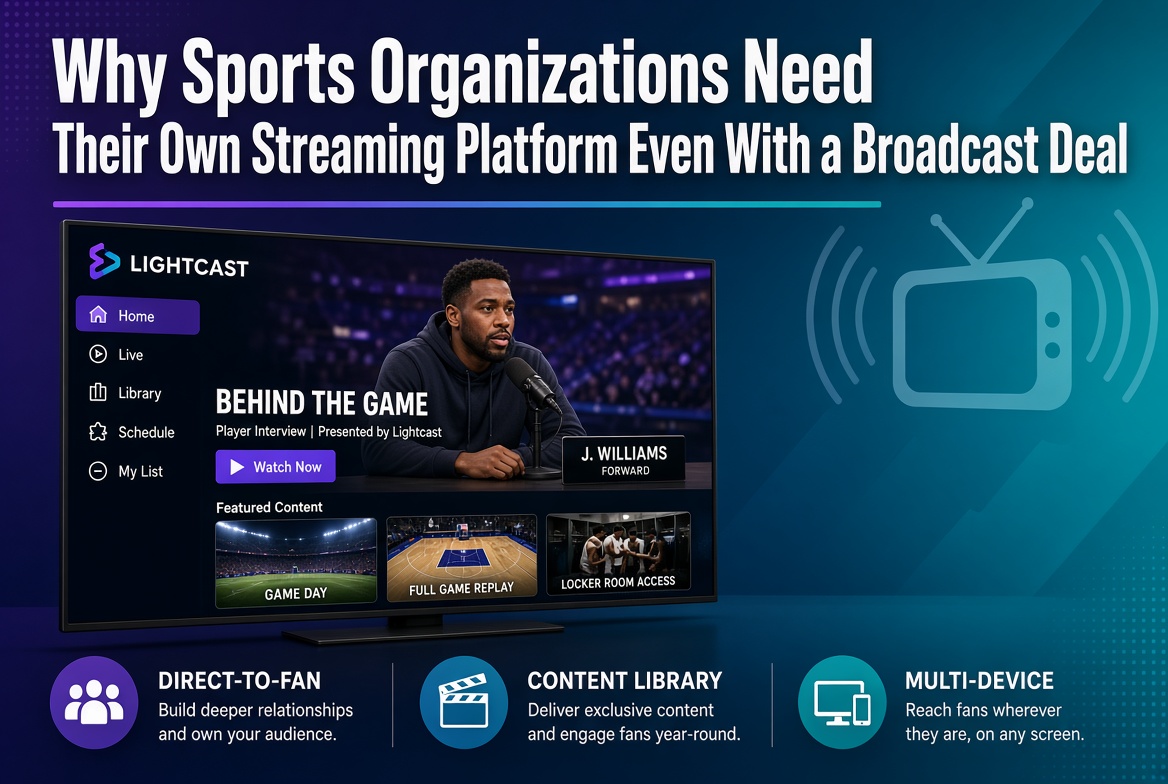
Sports organizations can run their own branded streaming platform even when their live games are contracted to a broadcaster, because a broadcast deal rarely covers everything a team produces. Interviews, press conferences, documentaries, and behind-the-scenes content can live on the team's own apps, building direct fan relationships, first-party data, and new revenue the broadcast deal never touches. The opportunity is large and growing, with the sports streaming market projected to rise from about $42.5 billion in 2026 to $101.6 billion by 2033. Lightcast gives sports organizations a branded platform that streams live and on-demand to Roku, Fire TV, Apple TV, iOS, Android, and web from one CMS across 70,000+ global CDN nodes, with the team owning its fan data, as part of a platform serving 5,000+ organizations.
Sports organizations can benefit from launching their own streaming platforms even when their live games are already contracted to major television networks. While broadcast agreements determine where certain games can be shown, teams often produce a wide range of additional content that can be distributed through their own branded streaming apps.
Player interviews, press conferences, behind-the-scenes programming, and team documentaries create opportunities to strengthen fan engagement, develop direct audience relationships, and build additional monetization channels beyond traditional broadcasting.
Major broadcast agreements play an important role in professional sports.
They give teams and leagues access to established television audiences while providing valuable exposure for live competitions.
But broadcasting rights often apply to specific games and programming. They do not necessarily cover every piece of content a sports organization produces.
That distinction creates an opportunity.
Teams can continue benefiting from existing broadcast partnerships while developing an owned streaming platform around the content they have the rights to distribute.
Rather than competing with the broadcast agreement, the owned platform becomes a complementary destination for fans who want more from their favorite teams. For the broader model, see our guide on direct-to-fan sports streaming.
A sports organization's media library extends far beyond the game itself.
Player interviews, coaching press conferences, training footage, travel documentaries, and behind-the-scenes features all provide opportunities for fan engagement.
Documentary-style programming, similar to the behind-the-scenes storytelling associated with Hard Knocks, can give supporters a closer look at the personalities and experiences that define a team.
This content helps fans connect with athletes beyond their performance during competition.
Instead of publishing these videos exclusively to third-party platforms, organizations can create a dedicated streaming destination where the entire library is available under their own brand. For the vertical view, see our guide on OTT platforms for sports organizations.
One of the biggest limitations of relying entirely on third-party video platforms is the lack of control over the audience relationship.
When teams publish content to YouTube or Facebook, those platforms control much of the viewing environment, recommendations, advertising, and available audience information.
An owned streaming platform changes that relationship.
Sports organizations can build direct connections with viewers through branded TV apps, mobile apps, and web experiences.
They can also access audience analytics that help them understand which content generates interest, how fans engage, and what programming encourages repeat viewing.
That information can become valuable when planning future content.
Sports organizations already know their fans are interested in live games.
The bigger question is what those fans want to watch between competitions.
Some viewers may prefer player interviews. Others may engage more deeply with behind-the-scenes documentaries, coaching discussions, or team history.
Streaming analytics allow organizations to evaluate those preferences.
Instead of relying entirely on assumptions, media teams can use viewing behavior to guide future programming and make more informed decisions about where to invest production resources.
Over time, this creates a content strategy built around actual fan interests. For how those metrics work, see our guide to OTT analytics.
A branded streaming platform can also support new commercial opportunities.
Depending on the organization's content rights and business model, teams can explore advertising, sponsorships, subscriptions, premium programming, and other monetization options.
The advantage is greater control over how those opportunities are structured.
Rather than depending exclusively on third-party advertising environments, sports organizations can develop partnerships and monetization strategies that align with their own brand and audience.
This can make content outside the live game more valuable to the overall sports business. For the full picture, see our pillar on video content monetization for content publishers.
One of the challenges with publishing sports content on social platforms is what happens after a video ends.
A fan might watch a player interview, only to be directed toward unrelated content or videos from competing organizations.
An owned streaming platform keeps the experience focused on the team.
After watching an interview, fans can discover additional programming, explore related videos, or continue watching other content from the same organization.
This creates a more connected experience and gives supporters additional reasons to return.
Sports organizations do not have to choose between traditional broadcasting and owned streaming.
Both can serve different purposes.
Broadcast partnerships provide exposure for live games, while owned streaming platforms create opportunities to distribute additional programming, understand fan behavior, and build direct audience relationships.
For teams already producing interviews, press conferences, documentaries, and behind-the-scenes content, the opportunity may not require creating entirely new programming.
It may simply require giving that content a destination the organization controls.
Lightcast publishes your branded app to Roku, Fire TV, Apple TV, iOS, Android, and web simultaneously, so fans watch your content as your service, on whatever device they already use.
Run live content alongside an on-demand library of interviews, documentaries, and behind-the-scenes programming, with live events converting to on-demand automatically. Explore the platform on our live streaming and media cloud OVP pages.
See what fans actually watch, and run subscriptions, pay-per-view, advertising, and sponsorship inside your own branded platform.
Lightcast does not retain, monetize, or share client data, so the fan base your platform builds stays yours.
To learn more or schedule a demonstration, visit lightcast.com.
Yes. Sports organizations can launch branded streaming platforms for content they have the rights to distribute, including interviews, press conferences, documentaries, and other programming outside existing broadcast agreements.
Depending on their rights, teams can publish player interviews, coaching press conferences, behind-the-scenes footage, documentaries, training content, and other original programming.
Owned streaming platforms give organizations greater control over branding, audience relationships, viewing experiences, analytics, and monetization opportunities.
Streaming analytics help teams understand which videos fans watch, how long they engage, and which content categories generate the strongest interest.
Yes. Depending on content rights and platform capabilities, sports organizations can explore sponsorships, advertising, subscriptions, premium content, and other monetization models.