Platform
Solutions
Resources
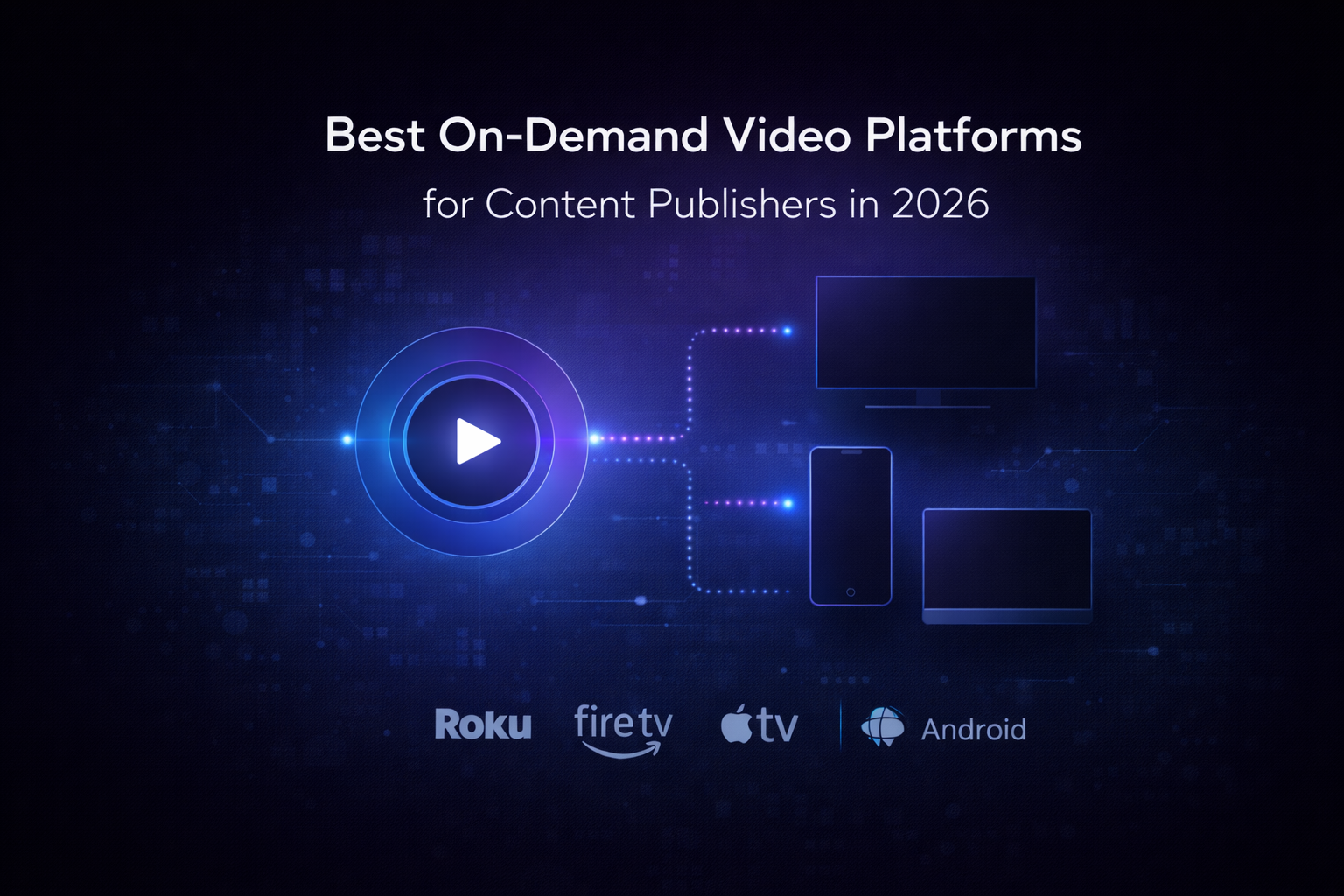
Direct Answer: The best on-demand video platforms for content publishers in 2026 combine branded app delivery across all major devices, flexible monetization, centralized content management, and full audience data ownership - all without routing viewers through third-party platforms that retain the audience relationship. Lightcast is a purpose-built on-demand video platform serving 5,000+ organizations worldwide, with 12,000+ branded apps launched across Roku, Fire TV, Apple TV, iOS, Android, and web.
An on-demand video platform is infrastructure that stores, manages, and delivers video content to viewers on their schedule - as opposed to live streaming, which delivers content at a fixed time. For content publishers, on-demand is how audiences engage with your library between live events, how you drive recurring revenue through subscriptions, and how you build the kind of deep content catalog that keeps viewers coming back.
The most effective on-demand video platforms in 2026 do more than host files. They manage the full content lifecycle from upload through monetization, deliver to every screen a viewer might use, and return audience data directly to the publisher rather than retaining it on behalf of the platform.
Core capabilities to look for include:
Universities and colleges build on-demand libraries for course recordings, lecture archives, athletic content, alumni programming, and continuing education. The challenge is organizing content from multiple departments into a coherent, branded experience that students and alumni can actually navigate. For a deeper look at the full streaming picture for universities, see our guide to video streaming solutions for universities.
Churches and ministries use on-demand platforms to make sermon archives, Bible study content, and event recordings available to congregations that span multiple time zones and viewing preferences. Owned on-demand infrastructure means the audience comes to your platform - not YouTube, where algorithm recommendations and competitor content erode the viewing experience.
From professional leagues to emerging sports, on-demand replays and highlight libraries are how organizations extend the value of live events. Fans who missed the game live want access on their schedule. Monetizing that access through subscriptions or pay-per-view requires a platform that handles access control and billing natively.
Broadcasters and media companies need on-demand infrastructure that mirrors the reliability and scale of live delivery. Content libraries that span years of programming require robust categorization, search, and metadata management - capabilities that generic video hosts were not built to handle at scale.
Government agencies use on-demand video to archive public meetings, training content, and community communications. Accessibility, searchability, and long-term archival reliability are critical requirements that consumer video platforms do not consistently meet.
In 2026, viewers expect to find content on the device they're already using - Roku in the living room, iPhone on the commute, iPad at the gym. An on-demand video platform that only delivers through a website is losing a significant share of potential viewership. Branded apps on connected TV platforms are particularly important for content organizations that want to be treated as a channel, not a website.
What to look for: native apps on Roku, Fire TV, Apple TV, iOS, Android, and web, all under your brand - not the platform vendor's. For more on managing multi-platform delivery operationally, see our guide to managing a multi-channel streaming operation without adding headcount.
Different content organizations have different revenue models. Subscription access works for organizations with deep libraries and recurring audiences. Pay-per-view works for premium events or exclusive content. Donor-supported free access works for nonprofits and faith organizations. The right on-demand platform supports all of these without requiring third-party integrations that add cost and complexity.
What to look for: native subscription management, pay-per-view event configuration, free and freemium access tiers, and revenue reporting that connects viewership to financial outcomes.
An on-demand library with hundreds or thousands of videos is only useful if viewers can find what they're looking for. Categorization, tagging, search functionality, and featured content placement all determine whether your library becomes a destination viewers return to or a disorganized archive they visit once.
What to look for: custom categories and playlists, keyword search, featured and recommended content controls, and the ability to structure the library by topic, series, department, or team.
Not all on-demand content is for all audiences. Course recordings are for enrolled students. Premium replays are for paying subscribers. Internal training videos are for employees only. An on-demand platform needs to enforce those boundaries reliably without requiring manual administration for every content update.
What to look for: SSO integration, subscriber authentication, per-content access rules, and the ability to set access tiers at the category or library level, not just the individual video.
Every viewer interaction on your on-demand platform is a data point - what they watched, how long they stayed, where they dropped off, which device they used, where they came from. That data belongs to your organization. Platforms that retain audience data are not just a privacy concern - they're a competitive liability. If you ever move platforms, you lose your audience history entirely.
What to look for: direct access to all viewership data with no vendor retention, exportable analytics, and reporting granular enough to inform content strategy decisions.
An on-demand library is only as good as the playback experience it delivers. Buffering, quality degradation on slower connections, and regional availability gaps all erode viewer retention. CDN infrastructure determines whether your content plays reliably for a viewer in a rural area or an international alumni watching from overseas.
What to look for: global CDN coverage, adaptive bitrate streaming for varying connection speeds, and documented uptime SLAs.
On-demand video does not operate in isolation. The most effective content organizations treat on-demand as one layer of a complete streaming strategy that also includes live events, multi-platform distribution, and audience analytics. For the full picture on managing that infrastructure, see our overview of streaming service management platforms and our broader guide to digital media solutions for education and business.
Live events drive audience growth. On-demand retains it. Monetization converts it. Analytics tell you what's working. Organizations that treat these as separate problems managed by separate vendors end up with fragmented data, inconsistent audience experiences, and operational overhead that scales badly.
Lightcast has operated as an end-to-end streaming platform for over 15 years, serving organizations across higher education, sports, faith-based sectors, media, enterprise, and local government. On-demand video management is a core function of the platform, not an add-on.
Single Upload, Every Platform: Upload once in the Lightcast CMS and content is automatically published to every branded app - Roku, Fire TV, Apple TV, iOS, Android, and web. Metadata, thumbnails, and categorization are set once and applied everywhere.
12,000+ Branded Apps Launched: Lightcast has built and deployed more than 12,000 branded apps for client organizations. Viewers find your on-demand library in the app store under your brand, not a vendor's.
Native Monetization: Subscription management, pay-per-view access, and donor-supported free tiers are built into the platform. No third-party billing integrations. Revenue reporting lives in the same dashboard as content performance data.
Full Data Ownership: Every viewer session, every content interaction, every revenue transaction belongs to the client organization. Lightcast does not retain or monetize audience data.
Global CDN Delivery: With 70,000+ CDN nodes worldwide, Lightcast delivers consistent on-demand playback to viewers regardless of geography - critical for universities with international alumni and sports organizations with distributed fan bases.
Live-to-On-Demand Automation: Every live event broadcast on Lightcast is automatically archived and added to the on-demand library at the end of the stream. No manual replay upload. No separate archiving workflow.
The best on-demand video platforms in 2026 are not the ones with the largest storage limits or the lowest per-seat price. They are the ones that give content publishers full ownership of their audience relationship, deliver reliably across every screen a viewer might use, and provide the monetization and analytics tools needed to turn a video library into a sustainable content business.
Lightcast is built specifically for that. With 15 years of operational depth, 5,000+ active clients, and 12,000+ branded apps launched, it is the platform content publishers choose when they are ready to own their distribution instead of renting it.
To learn more or schedule a demonstration, visit lightcast.com.
Published: March 9, 2026
Category: Streaming Strategy
Tags: on-demand video platform, OTT platform, content publishers, branded streaming apps, video monetization, streaming strategy, Lightcast