Platform
Solutions
Resources
Direct Answer: The best streaming platform for fitness and wellness brands in 2026 delivers live class streaming, builds an organized on-demand workout library that members return to daily, supports subscription monetization with tiered access, and gives the brand full ownership of member data rather than routing the audience relationship through a third-party platform. Lightcast serves fitness and wellness brands with purpose-built streaming infrastructure that turns a single studio into a global content operation - on branded apps across Roku, Fire TV, Apple TV, iOS, Android, and web that the brand owns and controls.
The fitness and wellness industry learned a hard lesson from the pandemic era: the brands that owned their streaming infrastructure survived and grew, and the brands that depended on third-party platforms or physical-only models had no fallback when the environment changed.
That lesson has not fully translated into infrastructure decisions. Many fitness brands that added streaming during that period did it quickly, on whatever platform was available - YouTube, Instagram Live, a hastily assembled Zoom link sent to email subscribers. The streaming presence they built was functional. The audience relationship it created belonged to the platform, not the brand.
The fitness and wellness brands building serious streaming operations in 2026 are doing something different. They are treating their digital content as a core product - not a complement to the physical experience or a stopgap for when the studio is closed, but a standalone revenue stream with its own subscriber base, its own content library, and its own audience relationship that belongs entirely to the brand.
For a broader look at owned streaming strategy, see our guide to digital media strategy for content publishers.
A live fitness class that buffers, drops, or delivers audio out of sync with the instructor's movement is not a minor technical inconvenience. It is a workout that the member cannot complete and a trust signal that the brand's digital experience does not meet the same standard as its in-person one.
Live class streaming for fitness has specific requirements that general-purpose live streaming infrastructure handles inconsistently. Low latency matters more than in most live content categories because members are following along in real time - a 30-second delay that might be acceptable for a news broadcast is disorienting for someone trying to sync their movements with an instructor on screen.
What to look for: low-latency live delivery optimized for interactive fitness content, redundant CDN infrastructure that maintains quality across varying home connection speeds, automatic DVR capture so members who join late or get interrupted can rewind within a live class, and automatic live-to-VOD conversion so every live class is immediately available in the on-demand library. For more on live streaming infrastructure, see our guide to live video broadcasting for content publishers.
The on-demand workout library is where fitness streaming subscriptions are retained or lost. A member who finds the live schedule inconvenient but has access to a well-organized library of on-demand classes - organized by instructor, duration, intensity, format, and target muscle group - has a reason to stay subscribed. A member who cannot find what they are looking for in a disorganized content feed cancels.
Fitness content organization is specific enough that generic video library infrastructure handles it poorly. A member searching for a 30-minute intermediate yoga class from a specific instructor on a specific day needs search and filter capabilities that reflect the fitness context, not a general video library taxonomy.
What to look for: on-demand library organization by workout type, duration, intensity, instructor, and equipment requirement, with search and filter functionality that reflects how fitness members actually navigate content. For more on on-demand library management, see our guide to on-demand video platforms for content publishers.
Fitness and wellness brands have well-established subscription models that streaming infrastructure needs to support natively. Monthly and annual memberships at different price points. Tiered access that differentiates between a basic subscriber and a premium one. Trial periods that convert free users into paying members. Class packs for members who want access to specific content without an ongoing subscription.
The brands building the most sustainable fitness streaming revenue are the ones where every monetization scenario - subscription billing, trial management, access tier enforcement, and revenue reporting - lives in the same system as the content itself, rather than being handled by a third-party billing tool that never fully reconciles with the viewership data.
What to look for: native subscription management with flexible tier configuration, trial period support, class pack and pay-per-class options alongside subscription tiers, and revenue reporting integrated with member engagement analytics in a single dashboard. For more on streaming monetization, see our guide to video content monetization for content publishers.
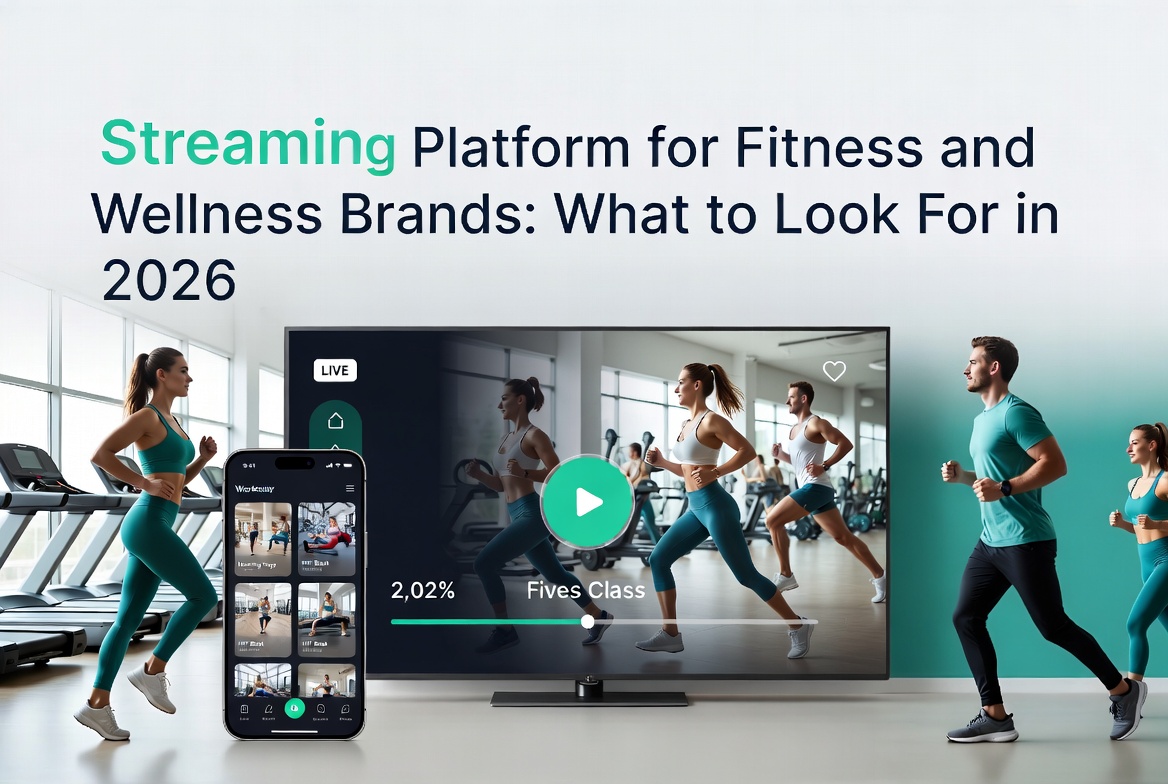
Fitness content is consumed across a wider range of devices than almost any other content category. The early morning workout on a phone before the rest of the household wakes up. The yoga session on a tablet in the living room. The strength class on the living room TV with enough space to actually move. A fitness streaming platform that only delivers well on one of those surfaces is failing a significant portion of its potential viewership.
Connected TV is particularly important for fitness content because the living room is where members have the space for full-body workouts. A branded Roku or Fire TV app that a member can pull up on the big screen is a meaningfully better workout experience than a browser window on a laptop propped on the coffee table.
What to look for: native branded apps on Roku, Fire TV, Apple TV, iOS, and Android under the brand's name, with a viewing experience designed for fitness content specifically - clear instructor visibility, audio quality optimized for music-driven workouts, and navigation that makes finding the next class fast rather than requiring the member to scroll through a generic content grid. For more on CTV app development, see our guide to smart TV app development for content publishers.
Fitness habit formation depends on consistency. A member who works out three times a week because the app reminds them at the right moment is a member who renews. A member who forgets the app exists between visits cancels.
Push notifications for live class reminders, new instructor content, program launches, and personalized class recommendations based on past viewing behavior are the engagement tools that make the difference between a fitness streaming subscription that becomes a daily habit and one that gets canceled after the first month because the member stopped thinking about it.
What to look for: push notification capability integrated into the CMS workflow, with the ability to segment notifications by member tier, content preference, and engagement history rather than blasting every notification to every subscriber. For more on mobile streaming best practices, see our guide to mobile video streaming best practices for content publishers.
Fitness streaming analytics have direct programming implications that other content categories do not. Which workout formats drive the strongest completion rates. Which instructors build the most loyal repeat viewer base. Which class durations correlate with the highest subscription retention. Which content types are most likely to convert a free trial into a paying subscriber.
These insights shape what content gets produced, which instructors get featured, and how the content library gets organized. They are only accessible when the streaming platform belongs to the brand - not when they live inside YouTube Analytics or a third-party platform dashboard that the brand accesses by permission.
What to look for: member-level viewership analytics with completion rates, return visit frequency, class preference patterns, and subscription correlation data, all accessible directly from the brand's dashboard without vendor mediation. For more on streaming analytics, see our guide to video analytics and insights for content publishers.
Boutique fitness studios with strong instructor-driven followings are the natural fit for subscription streaming. The member who loves a specific instructor's teaching style and attends their in-person classes three times a week is the same member who will pay for streaming access to that instructor's content when travel, schedule, or geography makes in-person attendance impossible. Streaming extends the brand's revenue relationship with its most loyal members beyond the studio walls.
Meditation, breathwork, yoga, and other mindfulness-oriented content has strong on-demand consumption patterns - members returning to specific practices repeatedly, building personal libraries of content they come back to regularly. An on-demand library that supports that kind of deep, repeat engagement is a stronger retention tool than a live class schedule that requires members to show up at a specific time.
Employers investing in corporate wellness increasingly want streaming content that employees can access on their own schedule - branded, curated, and delivered through infrastructure the employer controls rather than a consumer fitness app that also serves as a marketing platform for third-party products and services. Institutional licensing for corporate wellness programs is a revenue model that fitness streaming infrastructure needs to support alongside consumer subscription tiers.
Equipment brands that offer streaming content as a companion to their hardware have a specific streaming requirement: the content needs to feel like a natural extension of the product experience, not a generic fitness library that could accompany anyone's equipment. Owned streaming infrastructure with branded apps that reflect the equipment brand's identity builds that product-content relationship more effectively than a third-party content platform that the hardware manufacturer has limited control over.
Lightcast provides end-to-end streaming infrastructure for fitness and wellness brands - live class delivery, on-demand library management, subscription monetization, branded CTV and mobile apps, and complete member analytics - from a single platform the brand owns and controls.
Low-Latency Live Class Streaming: Lightcast delivers live fitness classes through redundant CDN infrastructure spanning 70,000+ global nodes, with automatic DVR capture and live-to-VOD conversion that makes every live class available on-demand the moment it ends.
Fitness-Context Library Organization: On-demand content managed in the Lightcast CMS is organized with the taxonomy and search functionality that fitness member navigation actually requires - by instructor, format, duration, intensity, and equipment - not a generic video grid.
Native Subscription Monetization: Monthly and annual subscription tiers, free trial periods, class packs, and institutional licensing are all configurable natively within Lightcast. Revenue reporting lives in the same dashboard as member engagement analytics.
Branded Apps on Every Platform: Lightcast builds and maintains branded apps on Roku, Fire TV, Apple TV, iOS, and Android under the fitness brand's name. Members find the brand in the app store, not a vendor's platform.
Full Member Data Ownership: Every member interaction with fitness content on a Lightcast platform belongs to the brand. Lightcast does not retain, monetize, or share member viewership data from client platforms.
Fastest Deployment in the Industry: Lightcast was named the Fastest Deployment OTT Platform Provider 2026 by The Silicon Review. For fitness brands working against a launch timeline or a seasonal membership cycle, getting to market fast matters. For more on that recognition, see our post on the Silicon Review award.
For more on how Lightcast serves other verticals, see our guides to OTT platforms for performing arts organizations, OTT platforms for sports organizations, and OTT platforms for faith organizations.
Fitness and wellness brands that own their streaming infrastructure own their member relationships. The subscription revenue, the engagement data, the content library, and the audience that builds around it all belong to the brand rather than the platform delivering it.
Lightcast gives fitness and wellness brands the infrastructure to build that owned streaming operation - with live class delivery that works, an on-demand library that retains members, and branded apps on every screen where members want to work out.
To learn more or schedule a demonstration, visit lightcast.com.
Published: May 12, 2026
Category: Fitness and Wellness Streaming
Tags: streaming platform fitness wellness, fitness streaming, wellness OTT, live fitness streaming, on demand fitness, fitness subscription platform, branded fitness app, Lightcast fitness streaming