Platform
Solutions
Resources
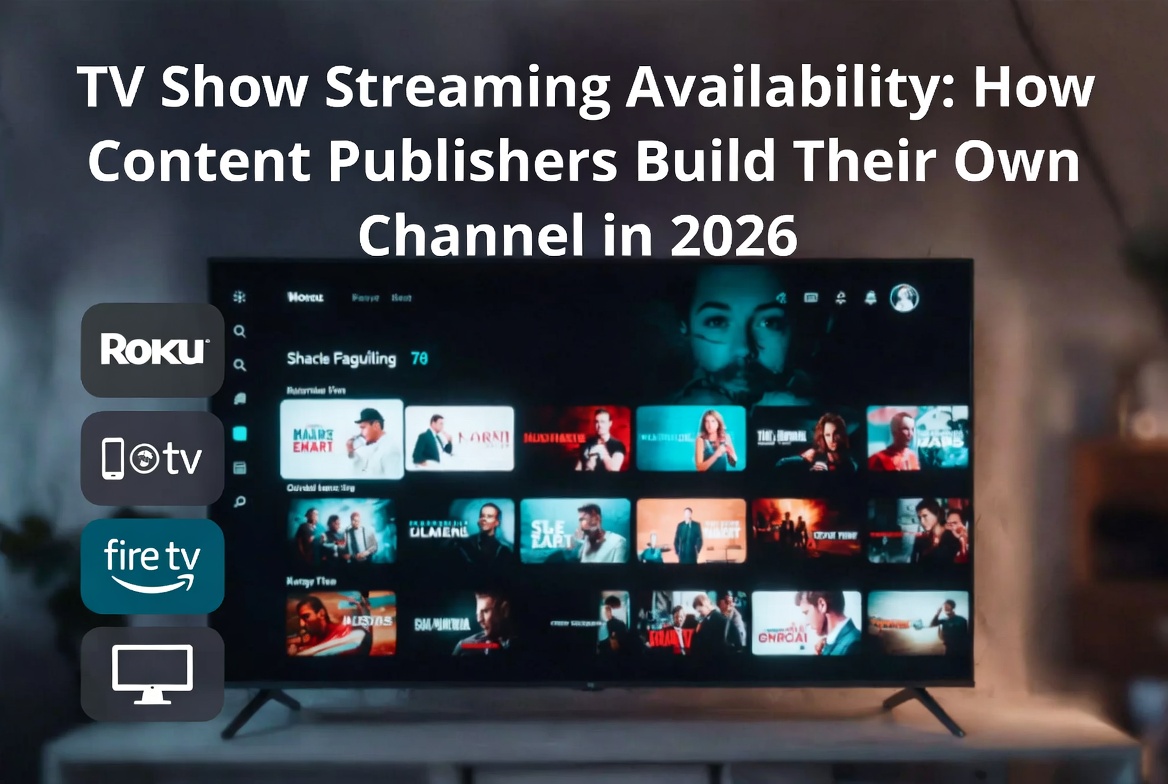
Direct Answer: TV show streaming availability in 2026 is no longer determined solely by networks, cable providers, and major streaming platforms. Content publishers - sports organizations, faith communities, broadcasters, universities, media companies, and independent producers - are building their own branded streaming channels on Roku, Fire TV, Apple TV, iOS, Android, and web, with full control over what is available, when it is available, and who can access it. Lightcast gives 5,000+ organizations the infrastructure to manage TV show streaming availability across every major platform from a single CMS, with real-time content control and audience data that belongs to the publisher.
For most of the history of television, streaming availability was simple to understand and impossible to influence if you were not a major studio or network. Content was available where the rights holders and distributors decided it would be available. Everyone else watched what was on.
That structure has not disappeared for major studio content. But alongside it, a parallel streaming ecosystem has grown where content publishers of every size build and control their own streaming availability directly. A regional sports league that streams every game live and keeps the full season archive available to subscribers. A church with a channel on Roku where years of sermon recordings are available on demand alongside live Sunday services. A university with a branded streaming app where athletic events, public lectures, and alumni programming are available to anyone who downloads it.
These organizations are not waiting for a network to greenlight their content or a streaming platform to license it. They are making their own content available on their own schedule, through infrastructure they own, to audiences they have built.
Understanding how to build and manage that streaming availability is what this guide covers.
The most fundamental factor controlling streaming availability is the platform decision. Content that lives on YouTube is available where YouTube decides to make it available, subject to YouTube's policies, and visible alongside YouTube's recommendations. Content that lives on owned OTT infrastructure is available where the publisher decides, subject to the publisher's policies, and presented in an environment the publisher controls entirely.
That distinction shapes every other aspect of streaming availability - who can find the content, on what devices, under what access conditions, and with what viewing experience surrounding it.
For a full breakdown of what platform ownership means for content publishers, see our overview of digital media strategy for content publishers.
Streaming availability in 2026 means availability on every screen a viewer might use. A content publisher whose programming is only accessible through a website is not fully available - they are partially available, on one surface, to one segment of potential viewers.
Full streaming availability means branded apps on Roku, Fire TV, and Apple TV for the living room viewing experience. Native iOS and Android apps for mobile. A web player for desktop and browser access. All of these surfaces need to reflect the same content library, the same access controls, and the same brand experience simultaneously.
For more on building that multi-platform distribution infrastructure, see our guide to television streaming and scheduling for content publishers and our guide to smart TV app development for content publishers.
Not all content should be available to all audiences at all times. Managing streaming availability means managing access with precision.
A pay-per-view live event that is available to purchasing viewers for 48 hours after the broadcast. A subscription library where the most recent content is available only to paying subscribers while an archive of older content is open to all. A continuing education course that becomes available to enrolled students on a defined date and expires at semester end. A premiere that is available for free for the first 72 hours to drive discovery and then moves behind a paywall.
All of these availability scenarios require access control infrastructure that executes precisely, across every platform simultaneously, without manual intervention at the moment each window opens or closes. For more on access control and monetization, see our guide to video content monetization for content publishers.
For content publishers with rights considerations or audience development goals that vary by geography, streaming availability needs to be manageable at the regional level. A sports league with broadcast rights agreements that cover specific markets. A faith organization that wants to make content freely available in developing markets while maintaining subscription requirements in North America and Europe. An educational institution that offers free access to students in certain countries as part of an institutional agreement.
Geographic availability controls that take effect immediately across every distribution platform, configurable per content item or per access tier, are a requirement for any content publisher operating across markets.
Television programming is built around schedules. Episode releases that drop on a defined day. Live events that go live at a specific time. Archive content that cycles through a linear channel on a programmed schedule. Behind-the-scenes content that becomes available the morning after a game.
Managing streaming availability at this level requires scheduling tools that execute automatically across every platform without requiring manual action at the moment each piece of content goes live. A content calendar set in the CMS on Monday should execute reliably through Sunday without anyone needing to be at a keyboard for each individual availability event.
For more on the relationship between scheduled and real-time content management, see our guide to real-time content control vs. scheduled publishing.
Content that is technically available but practically unfindable is not effectively available. Streaming availability includes the discoverability layer - category organization, keyword search, featured placements, series groupings, and recommendation logic that surfaces the right content to the right viewer at the right moment.
A sports organization with ten seasons of game footage needs search and filter functionality that lets a fan find a specific game by date, opponent, or player. A faith organization with hundreds of sermon recordings needs series organization and topic tagging that lets a new member find content relevant to their situation without scrolling through a chronological archive. An educational institution needs course organization that reflects academic structure rather than upload order.
Sports streaming availability is primarily about two things: live access and replay access. Every game available live for subscribers. Every replay available immediately after the broadcast ends. Archive seasons organized and searchable. Pay-per-view windows for premium events that open and close precisely. For more on sports streaming infrastructure, see our guides to OTT platforms for sports organizations, live sports streaming options, and OTT platforms for independent sports leagues.
Faith streaming availability centers on the weekly sermon cycle and the depth of the archive. New content available every Sunday. Archive organized by series, pastor, and topic. Special event programming available immediately after broadcast. Donor-supported free access that does not require a billing barrier for community members who cannot afford a subscription. For more on faith organization streaming, see our guide to OTT platforms for churches and faith organizations.
Broadcaster streaming availability spans the full complexity of content rights management. Linear channel programming available 24/7. VOD availability windows that respect rights agreements. Geographic restrictions that enforce broadcast territory limitations. Breaking content that becomes available immediately when news develops. For more on broadcaster OTT infrastructure, see our guide to OTT platforms for broadcasters.
Educational streaming availability is structured around academic calendars, enrollment status, and program requirements. Course content available to enrolled students from the first day of class. Public lectures and event recordings available to the broader community. Athletic content available to alumni and fans through subscription. Continuing education courses available to paying enrollees with defined access windows. For more on university streaming, see our guide to video streaming solutions for universities.
Lightcast is built for content publishers that need precise, reliable control over streaming availability across every platform simultaneously. Every aspect of availability management - platform distribution, access control, geographic restrictions, scheduling, and content organization - operates from a single Lightcast CMS without requiring separate tools or manual actions on each platform.
Simultaneous Multi-Platform Availability: Content published in Lightcast becomes available on Roku, Fire TV, Apple TV, iOS, Android, and web simultaneously. A single availability decision in the CMS executes across every surface at the same moment.
Precise Access Control: Subscription tiers, pay-per-view windows, geographic restrictions, and authenticated access all execute across every platform simultaneously, at the exact moment configured, without manual intervention.
Automated Scheduling: Content configured to become available at a specific date and time does so exactly when scheduled, on every platform, without anyone needing to initiate the action at the moment of release.
Real-Time Availability Changes: Content can be made available or restricted instantly across every platform the moment a decision is made in the CMS. A content correction, a rights window that closes early, a promotional free access period that opens at midnight - all execute in real time. For more on real-time control, see our guide to real-time content control for streaming platforms.
Automatic Live-to-VOD: Every live broadcast becomes available as on-demand content the moment it ends, automatically and without manual archiving. Live availability and on-demand availability are managed from the same platform with no operational gap between them. For more on live broadcasting, see our guide to live video broadcasting for content publishers.
Full Audience Data Ownership: Every viewer interaction with available content belongs to the publisher. Lightcast does not retain, monetize, or share availability or viewership data from client platforms. For more on analytics ownership, see our guide to video analytics and insights for content publishers.
12,000+ Branded Apps Launched: Lightcast has built and deployed more than 12,000 branded apps for content publishers across every major vertical. The operational experience behind that number means availability infrastructure that works from day one across every platform the publisher needs to reach.
TV show streaming availability in 2026 is increasingly determined by content publishers themselves rather than by network gatekeepers and distribution platforms. The organizations building their own streaming availability infrastructure are the ones deciding what their audiences can watch, on which devices, under what access conditions, and with what viewing experience surrounding it.
Lightcast gives content publishers complete control over streaming availability across every major platform from a single CMS, with the precision access management, automated scheduling, and real-time control that a serious content operation requires.
To learn more or schedule a demonstration, visit lightcast.com.
Published: May 20, 2026
Category: Streaming Strategy
Tags: TV show streaming availability, streaming availability, OTT content control, branded streaming channel, content publisher streaming, streaming access control, Lightcast streaming availability