
Platform
Solutions
Resources
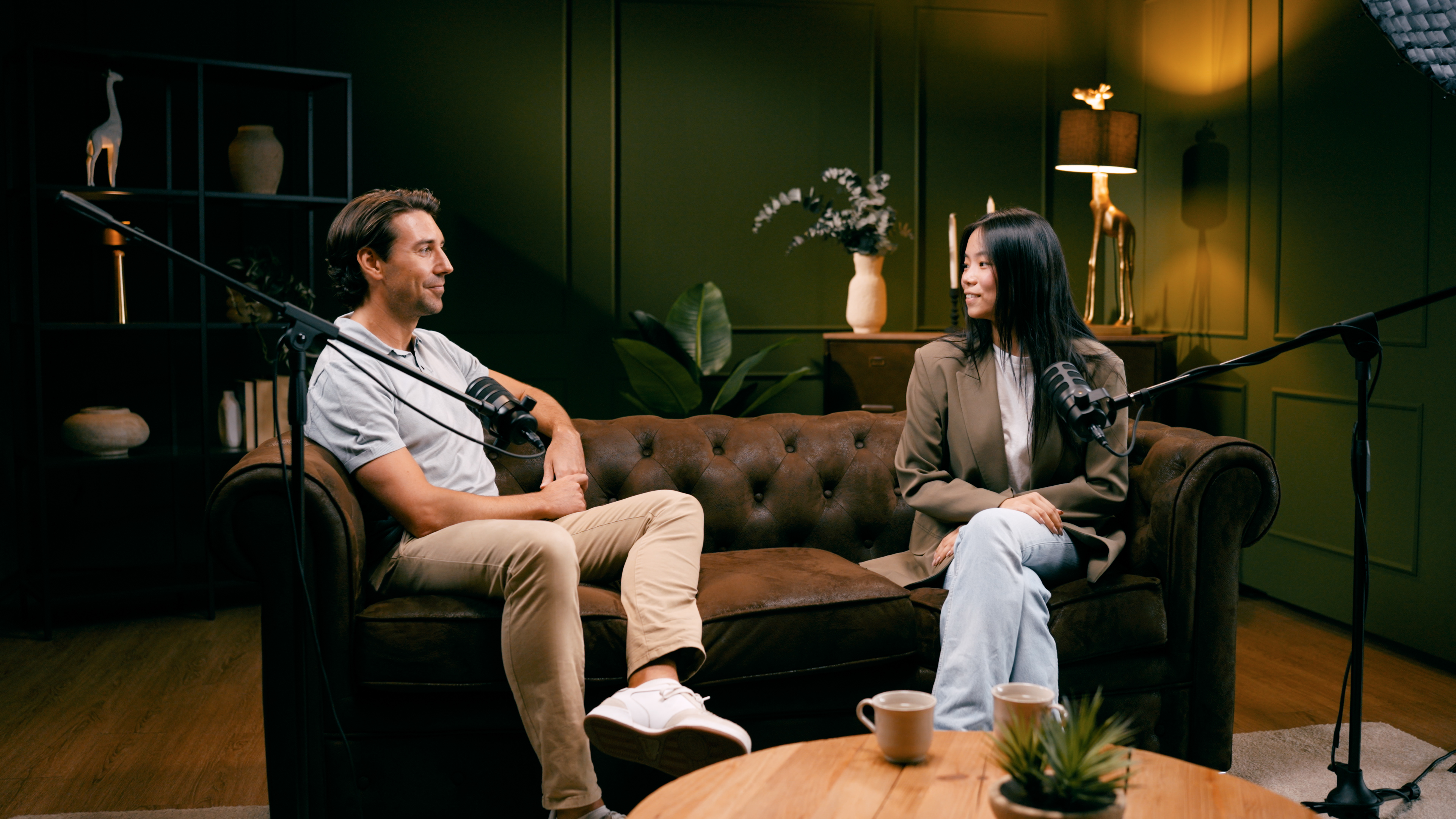
An episode that already lives as a file on a phone can earn a second life on a television screen if you turn a podcast to OTT video with a solid production and distribution plan.
Once you move to video, obviously your audience is no longer audio-only by default. The first question is whether this is worth doing at all, and the answer is: yes. Edison Research's Podcast Consumer 2026 study found that weekly consumers are now about as likely to watch as to listen, after video use overtook audio-only consumption in late 2025.
Infinite Dial figures for the same year put lifetime reach at 80% of Americans age 12 and older, about 230 million people, with 58% consuming a show in the prior month. YouTube has become the service weekly listeners name most often, which means a show that never appears as video is invisible in the place where the largest share of discovery is happening.
A pair of cameras, readable faces, and a background that does not collapse on a 65-inch panel will effectively carry an interview into video format. If the archive is already recorded as audio only, then waveform motion, chapter cards, guest stills, and lower-thirds can make older episodes usable on a set, provided the type is large enough to read from a couch and the cuts follow the same chapter marks you already use in the RSS file.
Living room viewing is often social and sometimes muted at the start, and store testers as well as ordinary households expect speech they can follow without having to turn the volume up unless they choose to. Burned-in titles are best for clips, while sidecar captions help a full episode because they can be switched off. Chapter titles that already exist for audio should become on-screen markers so a viewer who joins twenty minutes in knows who is speaking and what the segment is called.
Think in clips as well as in full runtimes. A two-minute exchange that names a problem the audience already has will travel really well on short-form rows and social feeds, and you can use this to point back to the complete episode that's inside your own application. Discovery for many shows now begins with those fragments, especially on YouTube. The clip is advertising.
Keep audio and pictures in one catalog so the metadata only has to be written once. The title, guest, description, artwork, and season number should all drive the television row, the mobile list, the web page, and the directory feed. When those fields live in separate tools, your listing can easily drift out of date while the RSS file is current, and a household that searches your name might end up finding two versions of the same episode. Lightcast's Media Cloud is built to take video and audio together, including automatic audio derived from a video upload and publishing to directories such as Spotify and TuneIn from the same archive.
Request a demo from us today at Lightcast.com, and get those podcast episodes you worked so hard on out to every screen.
